 Write Arabic

| Key Takeaways |
| Arabic script is written right-to-left with 28 letters, most of which change shape depending on their position in a word. |
| Learning to write Arabic in the UAE requires mastering Modern Standard Arabic script. |
| Most adult learners in the UAE can write basic Arabic sentences accurately within 2 to 4 months of structured weekly instruction. |
| Arabic letters connect within words like cursive, meaning print-style isolated letters cannot simply be placed side by side as in English. |
| Structured courses with native Arabic instructors consistently produce faster, more accurate writing results than self-study apps alone. |
You are living and working in the UAE, surrounded by Arabic on road signs, government documents, business cards, and official communications — and you cannot read or write a single word of it.
That gap is more significant than many expats initially realize, not for daily survival, but for professional credibility, cultural respect, and long-term integration into Emirati society.
Learning how to write in Arabic in the UAE is entirely achievable, and the structured path is clearer than most beginners expect. Arabic writing follows consistent, learnable rules — and with the right instruction sequence, most motivated adult learners move from zero to functional written Arabic within months, not years.
1. Understand What Arabic Writing Actually Is Before You Touch a Pen
To write in Arabic in the UAE, you must first understand that Arabic is an abjad — a writing system where letters primarily represent consonants, with vowel sounds either implied by context or marked by small symbols called Tashkeel (تشكيل). This is fundamentally different from the Latin alphabet, and treating it like English from the start is the most common mistake beginners make.
Arabic has 28 letters, all of which are consonants or long vowels. Short vowels — the sounds that fill the gaps between consonants — are typically omitted in everyday written Arabic, including in UAE newspapers, signage, and professional correspondence.
Learners who try to read and write Arabic without understanding this structure spend months confused about “missing” sounds before a good instructor clarifies it in one session.
Arabic Is Written Right-to-Left
Arabic flows from right to left, which affects not just letter direction but page layout, document structure, and even the direction you hold a pen.
Most learners adjust to this within two to three weeks of consistent practice. The initial adjustment feels disorienting, but it becomes automatic faster than expected.
Tashkeel: The Vowel Markers Beginners Rely On
In early learning stages, Arabic texts include Tashkeel — short diacritical marks placed above or below letters to indicate vowel sounds. The Fatha (َ) marks an “a” sound, the Kasra (ِ) marks an “i” sound, and the Dhamma (ُ) marks a “u” sound.
Beginners in UAE Arabic courses typically learn with fully voweled texts before progressing to unvoweled Modern Standard Arabic.
Shots Videos from Our Courses
Begin Your Arabic Journey in the UAE
Join Abjad Institute for a professional and immersive Arabic language experience tailored to your goals.
Book Your Free Trial2. Master the Arabic Alphabet as Individual Letters First
Before connecting letters into words, you need to know each of the 28 Arabic letters in isolation. This is where every serious Arabic writing program begins — and where skipping ahead causes problems that compound over months.
Each Arabic letter has a base form that you learn first. The letters are grouped by shared structural shapes, which makes memorization significantly faster than tackling them one by one in alphabetical order.
Abjad Academy’s Arabic alphabet course in the UAE uses this grouped approach, helping students in the UAE recognize and reproduce letter forms systematically rather than through rote repetition alone.
Start learning Arabic letters with a FREE trial class

The Core Arabic Letter Groups to Learn First
| Group | Letters | Shared Feature |
| Group 1 | ب، ت، ث | One base shape, dots vary |
| Group 2 | ج، ح، خ | One curved base shape |
| Group 3 | د، ذ | Short angular form |
| Group 4 | ر، ز | Curved tail, no connector |
| Group 5 | س، ش | Three-hump base |
| Group 6 | ع، غ | Eye-shaped base |
Learning letters in these structural groups — rather than in strict alphabetical order — typically halves the memorization time for beginners.
What Are the Six Non-Connecting Letters in Arabic?
Six Arabic letters — و، ز، ر، ذ، د، أ — do not connect to the letter that follows them in a word.
This is a grammatical and structural feature that most self-taught learners discover too late, after already developing incorrect writing habits. A trained instructor flags this on day one.
Begin Your Arabic Journey in the UAE
Join Abjad Institute for a professional and immersive Arabic language experience tailored to your goals.
Book Your Free Trial3. Learn How Arabic Letters Change Shape Based on Position in a Word
This is the step that surprises almost every beginner: in Arabic, most letters have four different forms depending on whether they appear at the beginning, middle, or end of a word, or in isolation. This is called positional variation, and mastering it is non-negotiable for readable Arabic writing.
Take the letter ع (Ayn) as an example:
| Position | Form | Example |
| Isolated | ع | standalone |
| Initial (start of word) | عَ | عَمَل (work) |
| Medial (middle of word) | ـعـ | فَعَل (did) |
| Final (end of word) | ـع | مَوْضِع (position) |
Most UAE-based learners who study without structured instruction spend weeks writing letters in their isolated form throughout entire words, producing text that native speakers cannot read.
This is one of the most common errors Abjad Academy instructors correct in the first sessions of our Arabic writing course in the UAE.
Start reading and writing Arabic with a FREE trial class

4. Practice Connecting Arabic Letters Into Syllables and Simple Words
Once you know the letter forms and their positional variations, you begin connecting them — and this is where Arabic writing starts to feel genuinely satisfying. Arabic letters within a word connect like cursive handwriting, flowing naturally from right to left.
Start with three-letter roots (Juzur — جذور). Arabic is a root-based language where most words derive from three-consonant roots. For example:
كَتَبَ Kataba “He wrote”
كِتَاب Kitab “Book”
مَكْتَب Maktab “Office / desk”
All three words share the root ك-ت-ب (K-T-B), relating to the concept of writing. Understanding this root system is not just useful for vocabulary — it helps you write more confidently because you recognize familiar letter sequences within new words.
Building Your First Written Arabic Sentences
Beginner writing practice in UAE Arabic instruction typically follows this sequence:
- Week 1–2: Individual letters in all four positions
- Week 3–4: Two- and three-letter word combinations
- Week 5–6: Basic Mubtada-Khabar (subject-predicate) sentences
- Week 7–8: Short descriptive phrases used in UAE daily and professional contexts
This progression is deliberate. Rushing to write full sentences before mastering positional forms creates foundational errors that are difficult to unlearn.
Begin Your Arabic Journey in the UAE
Join Abjad Institute for a professional and immersive Arabic language experience tailored to your goals.
Book Your Free Trial5. Learn the Rules of Modern Standard Arabic (MSA) Writing for UAE Contexts
In the UAE, formal written Arabic — in government documents, official correspondence, print media, and professional settings — uses Modern Standard Arabic (MSA), known in Arabic as Al-Fusha (الفصحى). This is the written standard across the Arabic-speaking world and the foundation of all formal literacy.
MSA writing follows specific grammatical rules that differ significantly from spoken Emirati Arabic dialect. The most important distinction for beginners: what Emiratis say in conversation is not what they write in formal contexts.
Understanding this early prevents a very common learner error — attempting to write phonetically based on dialect sounds heard in daily life.
Our course to learn Arabic for scratch at Abjad Academy is specifically designed for UAE residents starting from zero, building MSA writing competency with UAE-relevant contexts and examples from day one.
Enroll in Abjad’s Arabic from Scratch Course and get a FREE trial

Key MSA Grammar Rules That Affect Writing
I’rab (الإعراب) — grammatical case endings — is one of the most significant differences between MSA writing and dialect. In formal MSA writing, noun endings change based on grammatical function:
| Role | Ending | Example |
| Subject (Mubtada) | ُ Dhamma | المديرُ (the manager) |
| Object (Maf’ul) | َ Fatha | المديرَ |
| Possessive (Mudaf ilayh) | ِ Kasra | المديرِ |
In early instruction, these case markers appear in Tashkeel form above the letters. As learners advance, they learn to apply them correctly without visual markers.
Begin Your Arabic Journey in the UAE
Join Abjad Institute for a professional and immersive Arabic language experience tailored to your goals.
Book Your Free Trial6. Practice Writing Arabic Script by Hand Before Moving to Digital Typing
There is a persistent misconception among UAE-based learners — particularly those using language apps — that typing Arabic on a phone or keyboard is an acceptable substitute for handwriting practice. It is not, especially in the early stages.
Handwriting Arabic trains muscle memory for letter shapes, connection points, and proportions in ways that tapping a keyboard cannot replicate. Learners who skip handwriting practice consistently produce inconsistent digital Arabic because they never internalized the letter’s structural logic.
The standard instruction at Abjad Academy dedicates the first six to eight weeks of the writing program to handwritten practice before introducing digital input methods.
Adult learners in Dubai and Abu Dhabi who follow this sequence show noticeably more accurate digital output when they eventually transition to typing — because they understand the shape, not just the keystroke position.
Recommended Daily Handwriting Practice for UAE Learners
- 10–15 minutes daily of letter tracing with correct stroke direction
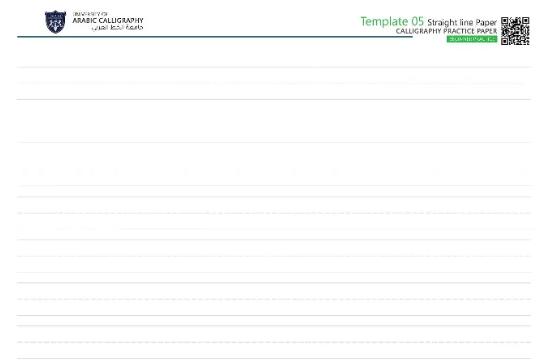
- Practice on Arabic calligraphy-lined paper (available at most UAE stationery shops and online via noon.com or Amazon.ae)
- Copy short Quranic verses or MSA sentences, not invented text
- Check your work against a reference — not just the printed model but a native instructor’s correction
7. Introduce Arabic Typing for Professional UAE Contexts
Arabic keyboards — both physical and digital — follow the QWERTY-mapped Arabic layout, where Arabic letters are assigned to English keyboard positions in a standardized way. Learning this layout is essential for anyone writing Arabic professionally in the UAE.
Most UAE government employees and corporate professionals type Arabic daily. WhatsApp messages, official emails, and document templates all require typed Arabic input — and written errors in formal correspondence reflect poorly on the sender’s professional credibility.
Abjad Academy’s Business Arabic course covers professional written communication for UAE corporate and government contexts, including formal email opening and closing formulas, the structure of official Arabic letters, and the specific honorifics used when addressing Emirati officials.
Enroll in Abjad’s Business Arabic Course and get a FREE trial

The Structure of a Formal Arabic Email in the UAE
Before learning business Arabic email writing, most students default to direct translation from English, producing phrases that read as blunt or disrespectful to native Arabic readers. The correct formal opening formula is:
حضرة السيد / السيدة [الاسم]، المحترم/ة
Hadrat Al-Sayyid / Al-Sayyida [Name], Al-Muhtaram/a
“Dear Respected Mr. / Ms. [Name]”
And the standard closing:
وتفضلوا بقبول فائق الاحترام والتقدير
Wa tafaddalu bi-qabul fa’iq al-ihtram wal-taqdeer
“Please accept the highest regards and appreciation”
These formulas are fixed, expected, and culturally required in formal UAE Arabic correspondence. Omitting them or replacing them with a direct English equivalent signals unfamiliarity with Arabic professional norms.
Read Also: How to Learn Egyptian Arabic in the UAE?
Our Students Reviews
Begin Your Arabic Journey in the UAE
Join Abjad Institute for a professional and immersive Arabic language experience tailored to your goals.
Book Your Free TrialRead Also: Arabic Writing Practice in the UAE
Start Writing Arabic in the UAE with Abjad Academy
Mastering Arabic writing in the UAE requires the right sequence — not just effort. Abjad Academy offers structured, UAE-context Arabic writing instruction with native Arabic instructors, including native Emirati teachers, delivering:
- Personalized follow-up and individual correction at every stage
- Curriculum built for UAE professional and family contexts
- Flexible scheduling for working professionals and busy families
- An elite learning community connecting expats and Emirati families
Explore our Arabic writing courseor book a free trial sessionto begin.
Check out our top Arabic courses for UAE residents:
- Arabic Alphabet Course
- Arabic Grammar Course
- Arabic writing course
- Arabic Speaking Classes
- Arabic from Scratch
- Business Arabic Course UAE
- Kids’ Arabic Grammar Course
- Arabic Conversation for Kids
Book your free trial session today

Conclusion
Arabic writing follows a consistent, logical structure — and that structure becomes clear quickly under proper guidance. The 28-letter system, positional letter forms, right-to-left flow, and MSA grammar rules are all learnable in a realistic, sequential order over weeks, not years.
For UAE residents specifically, the professional and social value of written Arabic competency extends well beyond basic communication. Written Arabic in formal contexts signals cultural respect, professional seriousness, and long-term commitment to life in the UAE — qualities that matter in government and corporate environments alike.
REad Also: How to Speak Arabic Language in the UAE?
Frequently Asked Questions About How to Write in Arabic in the UAE
How long does it take to learn to write in Arabic from scratch in the UAE?
Most adult beginners in the UAE can write simple, accurate Arabic sentences within three to four months of structured weekly instruction — typically two to three sessions per week. Reaching professional written Arabic proficiency for formal UAE correspondence takes most learners between eight and twelve months, depending on study consistency and prior linguistic experience.
Do I need to learn the Arabic alphabet before I can write Arabic words?
Yes — and in a specific way. You need to learn not just the 28 letter names and sounds, but their four positional forms (isolated, initial, medial, and final) before you can write readable words. Skipping this step and moving straight to word writing is the most consistent foundational error among self-taught Arabic learners in the UAE.
Is handwriting Arabic necessary, or can I just learn to type?
Handwriting is essential in early stages, even for learners whose primary goal is digital Arabic writing. Handwriting builds the structural understanding of letter shapes and connection logic that makes digital typing accurate. Learners who skip handwriting typically produce inconsistent typed Arabic because they learned key positions without internalizing the underlying letter geometry.
Related Articles
Write Arabic





Leave a Reply