 Learn Arabic
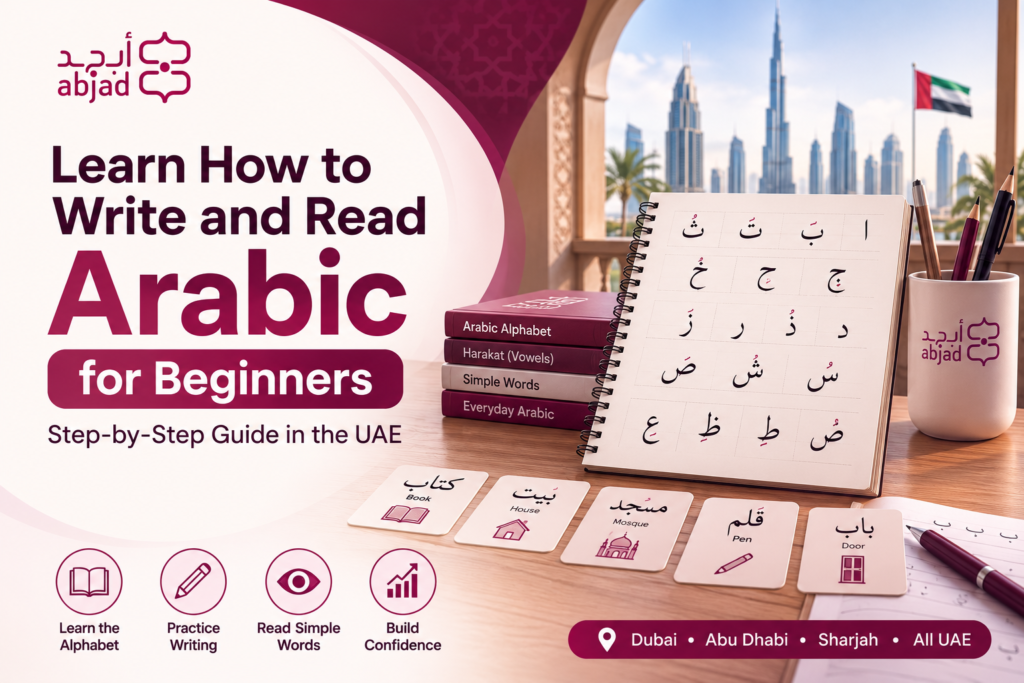
Learning Arabic can feel overwhelming at first, especially if you’re unfamiliar with a completely different alphabet and writing system. Many beginners living in the UAE postpone learning Arabic because they believe it takes years to become proficient. In reality, the biggest obstacle isn’t the language itself—it’s starting without a clear learning plan.
If you live in Dubai, Abu Dhabi, Sharjah, Ajman, Ras Al Khaimah, Fujairah, Umm Al Quwain, or Al Ain, learning Arabic offers practical advantages every day. You’ll recognize road signs more easily, understand official documents, communicate more confidently with Arabic-speaking colleagues, and develop a deeper appreciation for the country’s culture and traditions.
The good news is that you don’t need to master Arabic grammar before reading your first sentence. By following the right sequence—starting with the alphabet, then learning pronunciation, writing, and reading—you can build a solid foundation much faster than you might expect.
Step 1: Learn the Arabic Alphabet First
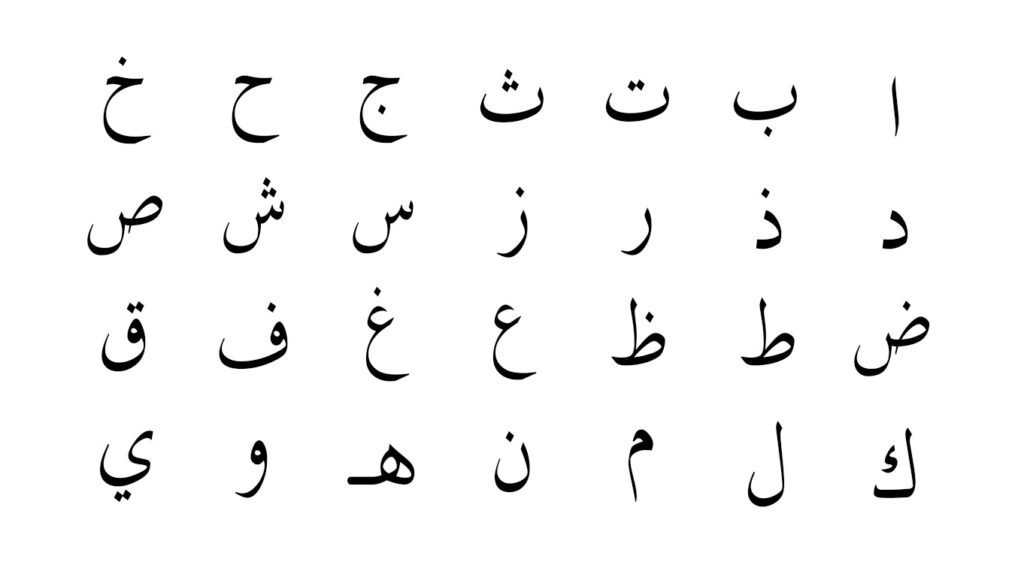
Every successful Arabic learner starts with the alphabet. Before reading or writing Arabic, you need to recognize the 28 Arabic letters and understand how each one sounds.
If you’re living in the UAE, you’ll see Arabic everywhere—from road signs and Dubai Metro stations to government offices and shopping malls—making it easier to practice what you learn every day.
Arabic is written from right to left, and many letters change shape depending on their position in a word. Don’t let this discourage you; these patterns become familiar with regular practice.
A. Learn the Letters in Small Groups
Instead of memorizing all 28 letters at once, learn four or five letters each day. Focus on each letter’s:
- Name
- Pronunciation
- Shape
- Position within a word
B. Learn Similar Letter Groups
Many Arabic letters look similar, making them easier to learn in groups rather than individually. By focusing on these letter families, you’ll quickly recognize the small differences—such as the number or placement of dots—that distinguish one letter from another.
| Letter Group | Difference |
| ب – ت – ث | Number and position of dots |
| ج – ح – خ | Dot placement |
| د – ذ | Additional dot |
| ر – ز | Additional dot |
| س – ش | Three dots |
Grouping similar letters makes them easier to remember.
C. Practice Pronunciation
Some Arabic sounds don’t exist in English, so listen to native speakers and repeat each letter aloud. If your goal is to learn how to write and read arabic alphabet, building a strong foundation here will make reading everyday Arabic in the UAE much easier.

Step 2: Practice Writing Every Letter
Reading and writing should develop together. Once you’ve learned a few Arabic letters, practice writing each one repeatedly until it becomes familiar.
Focus on:
- Writing each letter on its own.
- Repeating it 10–15 times.
- Keeping consistent spacing.
- Following the correct stroke order.
Practice Writing from Right to Left
Writing from right to left may feel unusual at first, but it quickly becomes natural with regular practice. As you build this habit, you’ll find it easier to write simple Arabic words and names that you may come across in everyday life in the UAE, whether you’re filling out forms, taking notes during an Arabic class, or helping your child with schoolwork.
For the best results, practice for 15–20 minutes each day instead of studying for several hours once a week. Short, consistent practice sessions build stronger handwriting skills and make writing Arabic feel more natural over time.
Read More: How Long Does It Take to Learn to Read Arabic?
Step 3: Learn the Arabic Vowel Marks (Harakat)
Once you’ve learned the Arabic alphabet, the next step is understanding Harakat—the short vowel marks that determine how each letter is pronounced. Mastering Harakat early makes it much easier to read Arabic correctly instead of guessing how words should sound.
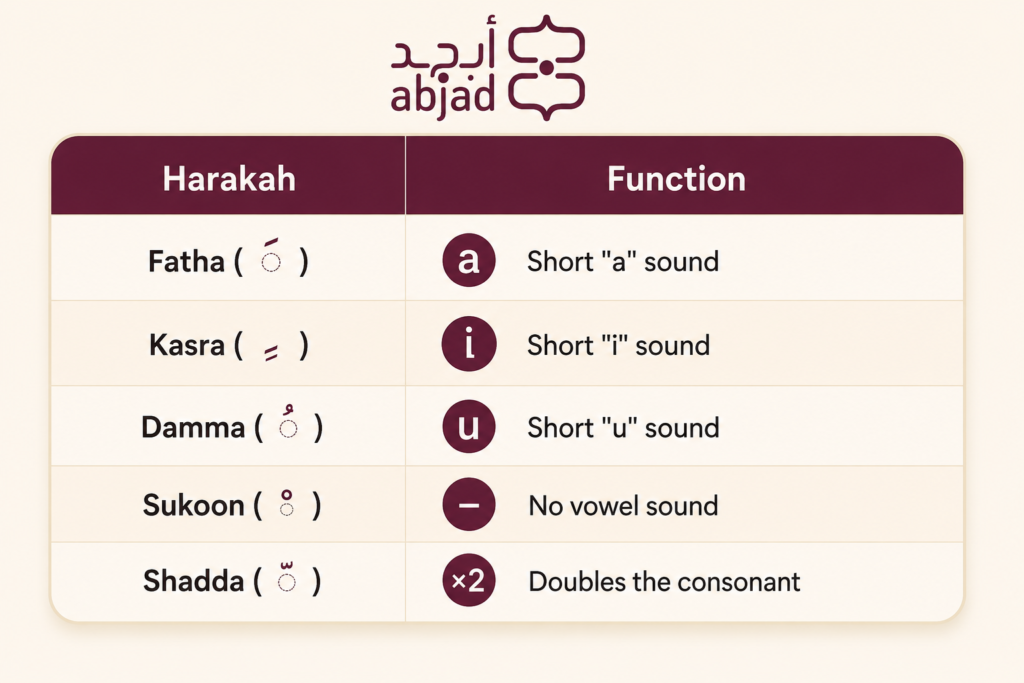
Although they look small, Harakat completely change the pronunciation of Arabic words. Many beginners memorize letters but overlook these marks, making it difficult to read even simple Arabic correctly.
Accurate pronunciation becomes especially useful when reading Arabic school materials, community announcements, or official information that includes vowel marks. Understanding Harakat helps you read confidently instead of guessing how unfamiliar words should sound.
Spend 10–15 minutes each day practicing words with Harakat before moving on to full sentences. A strong foundation at this stage will make every reading lesson easier as you continue learning Arabic.
Step 4: Start Reading Simple Arabic Words
Once you know the alphabet and Harakat, it’s time to combine letters into meaningful words.
Start with short, familiar vocabulary such as:
- باب (Door)
- بيت (House)
- قلم (Pen)
- مسجد (Mosque)
- كتاب (Book)
Read each word slowly by identifying every letter, noticing the vowel marks, and pronouncing each sound before blending them together. This simple exercise builds both reading accuracy and confidence.
As your vocabulary grows, you’ll start recognizing these words in everyday conversations and familiar places around the UAE. Whether you’re visiting a mosque, browsing a bookstore, or accompanying your child to school, you’ll notice that many of the words you practice appear naturally in your surroundings, reinforcing what you’ve learned.
Avoid jumping straight to newspapers or advanced books. Instead, read each word aloud three to five times before moving on. With consistent practice, you’ll gradually recognize complete words instead of reading one letter at a time.

Inside Our Live Classes
Don’t just take our word for it—see for yourself! Click below to watch short clips from our live classes and meet the instructors who will guide your learning journey.
Begin Your Arabic Journey in the UAE
Join Abjad Institute for a professional and immersive Arabic language experience tailored to your goals.
Book Your Free TrialStep 5: Learn How Arabic Letters Connect
One feature that surprises most beginners is that Arabic letters change shape depending on where they appear in a word. A single letter can have four forms:
- Isolated
- Initial
- Medial
- Final
The good news is that the pronunciation stays the same—only the shape changes. For example, the letter ب looks different when it appears at the beginning, middle, or end of a word.
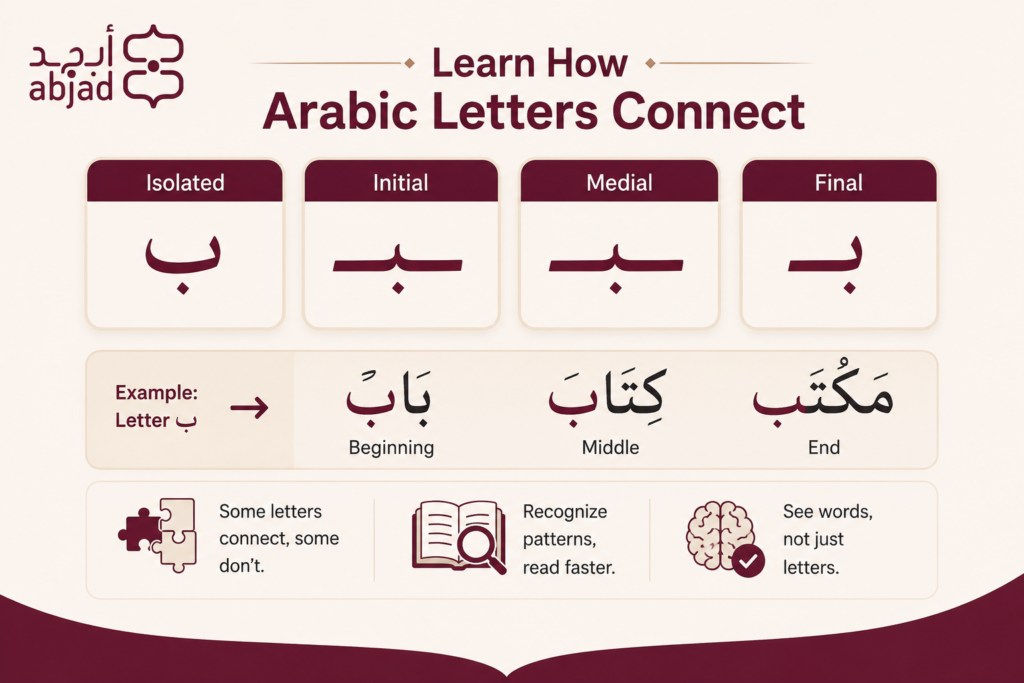
You’ll also discover that some Arabic letters don’t connect to the letter that follows. Learning these exceptions early will make reading much smoother.
As you become familiar with connected letters, you’ll start recognizing complete words instead of individual characters. Instead of stopping to identify every letter, your brain will naturally recognize common letter patterns, making reading faster, smoother, and more enjoyable.
Read More: How to Read Arabic Calligraphy?
Step 6: Read Short Sentences Every Day
Once you’re comfortable reading individual words, start combining them into short sentences. This is the stage where Arabic becomes more practical, helping you recognize simple phrases you’ll encounter in everyday life across the UAE.
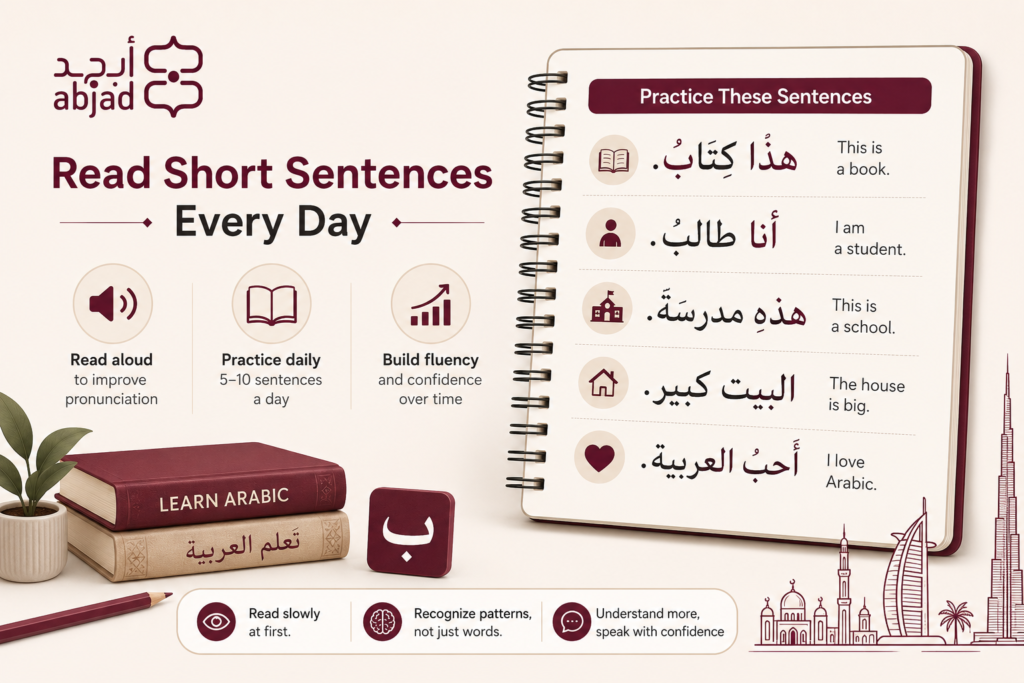
Practice with sentences like:
- هذا كتاب. (This is a book.)
- أنا طالب. (I am a student.)
- هذه مدرسة. (This is a school.)
- البيت كبير. (The house is big.)
- أحب العربية. (I love Arabic.)
Read each sentence slowly, paying attention to the pronunciation of every word before increasing your speed. Reading aloud also improves your fluency and confidence.
As you practice, you’ll begin recognizing common sentence patterns instead of translating every word individually. This makes reading faster, improves comprehension, and prepares you to understand short conversations, messages, and beginner-level Arabic texts with greater confidence. Aim to read five to ten short sentences every day—consistent practice is the key to becoming a fluent reader.
Step 7: Practice Writing Every Day
Reading helps you recognize Arabic words, but writing helps you remember them. A simple daily routine can make a noticeable difference without requiring hours of study.
| Activity | Time |
| Write five new vocabulary words | 5 minutes |
| Copy two or three short sentences | 5 minutes |
| Write one sentence from memory | 5 minutes |
| Review yesterday’s lesson | 5 minutes |
Just 15–20 minutes of daily practice is enough to build steady progress. Turn everyday interactions into writing exercises by noting down new Arabic words you hear from colleagues, teachers, neighbors, or customer service staff, then rewrite them at home. This simple habit reinforces your vocabulary and makes Arabic part of your daily routine instead of something you practice only during lessons.

Step 8: Listen While Reading
One of the fastest ways to improve your Arabic reading is to combine listening with reading. As you follow written Arabic, listen to a native speaker pronounce the same text, then read it aloud and compare your pronunciation. This simple practice improves pronunciation, listening comprehension, reading fluency, and speaking confidence at the same time.
A highly effective technique is shadowing: listen to one sentence, pause the audio, and immediately repeat it. Over time, you’ll naturally develop more accurate pronunciation and a smoother reading rhythm.
Because Arabic is part of everyday life, you’ll hear it in conversations, public announcements, and community settings. Try matching what you hear with the written text whenever possible. The more you connect spoken Arabic with written Arabic, the faster you’ll improve your reading accuracy and overall confidence.
Step 9: Join an Arabic Course in the UAE
Self-study is a great way to start, but most beginners eventually benefit from learning with an experienced teacher. A structured Arabic course provides clear lessons, regular feedback, and personalized guidance that are difficult to achieve through self-study alone.

Whether you’ve recently moved to Dubai, work in Abu Dhabi, have children attending school in Sharjah, or live anywhere else in the Emirates, learning with qualified instructors helps you build practical reading and writing skills you can use every day. Regular feedback also helps you correct pronunciation and handwriting mistakes before they become habits.
When choosing an Arabic course, look for one that offers:
- Live feedback on pronunciation and writing.
- A clear step-by-step learning roadmap.
- Flexible schedules that fit work or school commitments.
- One-to-one or small-group lessons based on your level.
Read also: Is It Compulsory to Read Quran in Arabic?
How Long Does It Take to Learn to Read and Write Arabic?
The time it takes to learn Arabic depends on your study routine, previous language experience, and whether you’re learning independently or with a teacher. However, with consistent daily practice, most beginners living in the UAE can expect steady progress.
| Timeline | What You Can Expect |
| Week 1 | Learn the Arabic alphabet, recognize the 28 letters, and practice their basic sounds. |
| Month 1 | Read simple words, write basic vocabulary, and understand Harakat. |
| 3 Months | Read short paragraphs, write simple sentences, and recognize common Arabic words you see on signs, menus, and public places across the UAE. |
| 6 Months | Read comfortably, write short texts, and communicate with greater confidence in everyday situations such as shopping, using public transport, or understanding basic Arabic notices. |
Remember that learning Arabic is a gradual process, not a race. Studying for 20 minutes every day is usually far more effective than spending several hours once a week. With consistent practice, you’ll gain the confidence to use your reading and writing skills in everyday life, whether at work, in your community, or while navigating daily activities across the UAE.
Why Learning Arabic Is Especially Valuable in the UAE?
Living in the UAE gives you a unique advantage when learning Arabic because you can apply what you learn every day. Instead of practicing only during lessons, you’ll naturally build your skills through daily interactions, making your progress faster and more meaningful.

Learning to read and write Arabic helps you feel more confident in everyday situations, whether you’re communicating with Arabic-speaking colleagues, following school updates, understanding official documents, or building stronger relationships within the local community. It also gives you a deeper appreciation of Emirati culture and traditions.
From a career perspective, Arabic is a valuable skill across industries such as education, healthcare, tourism, hospitality, customer service, banking, and government. Whether you’re planning to advance professionally or simply integrate more comfortably into life in the Emirates, learning Arabic is an investment that continues to benefit you long after your first lesson.
Read more: Is Quranic Arabic Different from Normal Arabic?
Common Mistakes Beginners Make
Many beginners unknowingly slow their progress by developing habits that make learning Arabic more difficult. Avoiding these common mistakes will help you build stronger reading and writing skills from the start.
1. Memorizing Letters Without Reading
Learning the Arabic alphabet is only the first step. If you don’t practice reading words and short sentences regularly, you’ll struggle to recognize letters quickly in real text.

2. Ignoring Harakat
Many beginners skip vowel marks (Harakat) and focus only on letter shapes. This often leads to incorrect pronunciation and makes it harder to read everyday Arabic, including signs, notices, and beginner materials commonly found across the UAE.
3. Not Writing Every Day
Writing reinforces what you learn. Even 15–20 minutes of daily practice helps improve letter recognition, spelling, and handwriting much faster than studying occasionally.
4. Moving to Difficult Texts Too Quickly
Trying to read newspapers or advanced books too early can be discouraging. Instead, start with children’s books, beginner readers, or simple Arabic used on public signs and information boards before progressing to longer texts.
5. Studying Without a Clear Plan
Switching between random YouTube videos, apps, and websites often leads to slow progress. Following a structured learning path with clear lessons and regular practice makes it much easier to stay motivated and achieve consistent results.
Watch Our Classes in Action
Curious what a real session looks like? Take a peek inside our interactive classrooms and see how our expert instructors bring the Arabic language to life. Watch a sample lesson below!
Begin Your Arabic Journey in the UAE
Join Abjad Institute for a professional and immersive Arabic language experience tailored to your goals.
Book Your Free TrialStart Learning to Read and Write Arabic with Abjad Institute
Whether you’ve recently moved to Dubai, are building your career in Abu Dhabi, raising a family in Sharjah, or simply want to feel more confident using Arabic in everyday life, learning with a structured program can help you progress faster than studying on your own.
At Abjad Institute, our courses are designed for beginners from non-Arabic backgrounds, combining step-by-step lessons, qualified instructors, and practical exercises that develop reading, writing, pronunciation, and confidence. Choose live online classes with personalized feedback or learn at your own pace with flexible self-study programs that fit your schedule.
Start your Arabic learning journey today with Abjad Institute.
Discover Our Arabic Courses
- Arabic Course in the UAE
- Arabic Intensive Course
- Learn Arabic from Scratch Course
- Madinah Arabic Course
- Arabic Classes for Adults
- Arabic Classes for Beginners
- Self-Paced Arabic Course
- Basic Arabic Course
- Arabic Speaking Classes
- Learn to Write Arabic Course
- Arabic Grammar Course
- Learn Arabic Alphabet Course

Begin Your Arabic Journey in the UAE
Join Abjad Institute for a professional and immersive Arabic language experience tailored to your goals.
Book Your Free TrialConclusion
Learning to read and write Arabic doesn’t happen overnight, but it also doesn’t have to be complicated. By following a clear, step-by-step approach—starting with the Arabic alphabet, practicing writing, learning Harakat, reading simple words and sentences, and building a consistent daily routine—you’ll develop the skills and confidence needed to use Arabic in everyday life.
One of the biggest advantages of learning Arabic while living in the UAE is the opportunity to practice what you learn every day. Every conversation, school update, workplace interaction, or community experience becomes another chance to strengthen your reading and writing skills.
The most important step is simply getting started. Stay consistent, practice a little every day, and learn with a structured program that matches your goals. Over time, you’ll find yourself reading, writing, and understanding Arabic with far greater confidence than you imagined possible.
Read also: Does Arabic Read Right To Left?
Frequently Asked Questions
Starting to learn Arabic often raises a few common questions, especially for beginners. Here are clear, practical answers to help you begin your learning journey with confidence.
Can I learn Arabic without knowing the alphabet?
No. Learning the Arabic alphabet is the foundation of reading and writing. Once you recognize the 28 letters and their sounds, you’ll be able to build words, read simple sentences, and continue progressing with confidence.
How long does it take to read and write Arabic fluently?
It depends on how consistently you practice. With 15–20 minutes of daily study, many beginners can read simple words and sentences within the first few months, while fluency develops through regular reading, writing, and listening.
Is Arabic difficult for English speakers?
Arabic is different from English, particularly in its alphabet and writing system, but it becomes much easier when you follow a structured, step-by-step learning plan instead of trying to learn everything at once.
Can I learn Arabic online in the UAE?
Yes. Online Arabic courses are a popular choice because they offer flexible schedules, live instruction, and personalized feedback. They’re especially convenient for busy professionals, university students, and parents balancing work and family commitments.
What is the best way to practice Arabic writing?
The best approach is to practice every day. Write new vocabulary, copy short sentences, and review previous lessons regularly. Combining writing, reading, and listening in the same study session will help you improve faster than focusing on just one skill.
Related Articles
Learn Arabic






Leave a Reply