 Learn Arabic
Your child knows the letters. But a full sentence makes them stop. That gap is normal, and easy Arabic stories for kids are the bridge across it. These are short books with full vowel marks and clear pictures. Your child reads a real page instead of drilling flashcards.
Most story lists just hand you titles and stop. That is the problem. A book that is easy for a six-year-old in Cairo can be far too hard for a six-year-old in London who hears Arabic only at weekends.
Thus, we will focus on three things. How to judge a book’s level in about thirty seconds. Which titles and free libraries to open first. And a simple three-pass routine that turns one short story into real reading progress.
Three Easy Arabic Stories to Start Your Child’s Reading Journey
Most beginner readers fall into one of four situations. Read the four headings below and find the one that sounds like your child, then start with that book. You do not need a big collection yet. Four books at the right level will do more than twenty at mixed levels.
1. أَنَا عِنْدِي (I Have): If Your Child Reads Letter by Letter
أَنَا عِنْدِي (I Have) turns the most common Arabic words into words your child recognises at a glance, instead of sounding out.
A child who reads letter by letter never reaches the end of a sentence. By the last word, they have forgotten the first. This book fixes that by repeating the same two words, أنا and عندي, on every page.
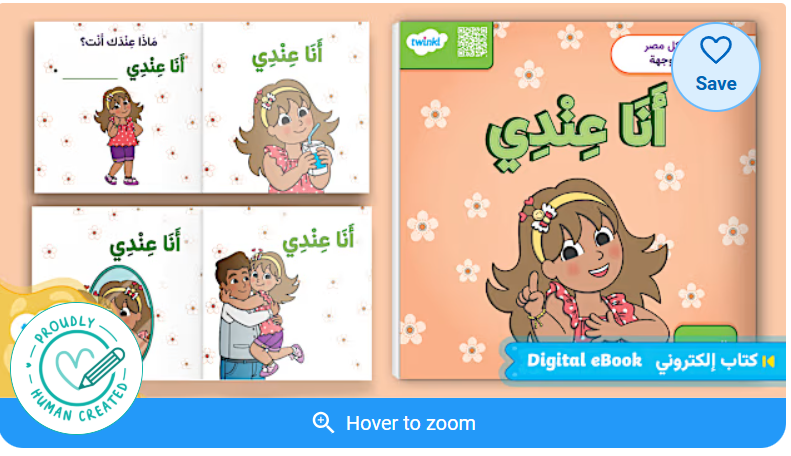
Each page then adds one new noun beside a clear picture. Two known words plus one to work out is the balance that keeps a child moving instead of stalling.
After two or three readings, cover the picture and ask them to read the line alone. If it still comes out smoothly, the words are truly known.
2. أَضَعْتُ أُخْتِي! (I Lost My Sister!): If Your Child Reads Sentences but Knows Few Words
أَضَعْتُ أُخْتِي! (I Lost My Sister!) teaches everyday home words inside a story your child wants to finish.
Some children sound out a sentence perfectly and still miss the meaning. Their reading is fine, but their vocabulary is thin. Word lists rarely fix that, because children forget them within a week.
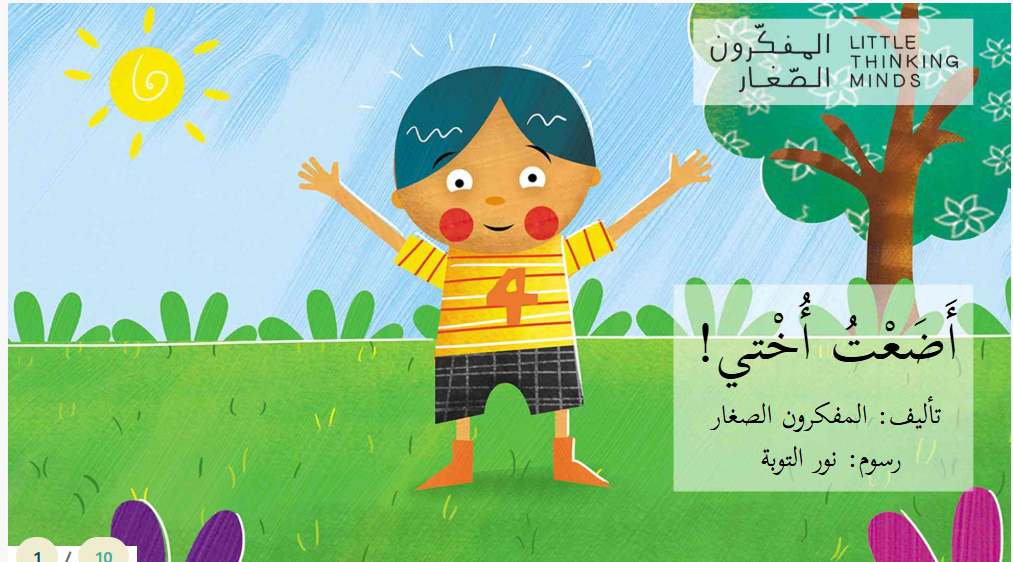
This story works differently. A boy searches for his sister during hide-and-seek, and every room brings a new household word. Your child meets each word while they are curious about what happens next, and that is why it stays.
Point at the object in the picture instead of translating it, so the Arabic word links to the thing and not to English. Then name the same objects around your own house, and use three or four of them all week.
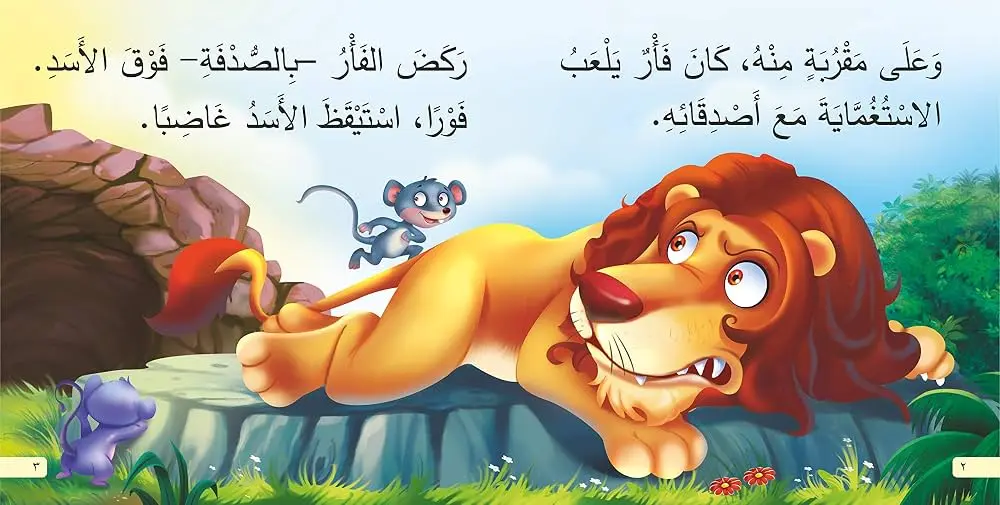
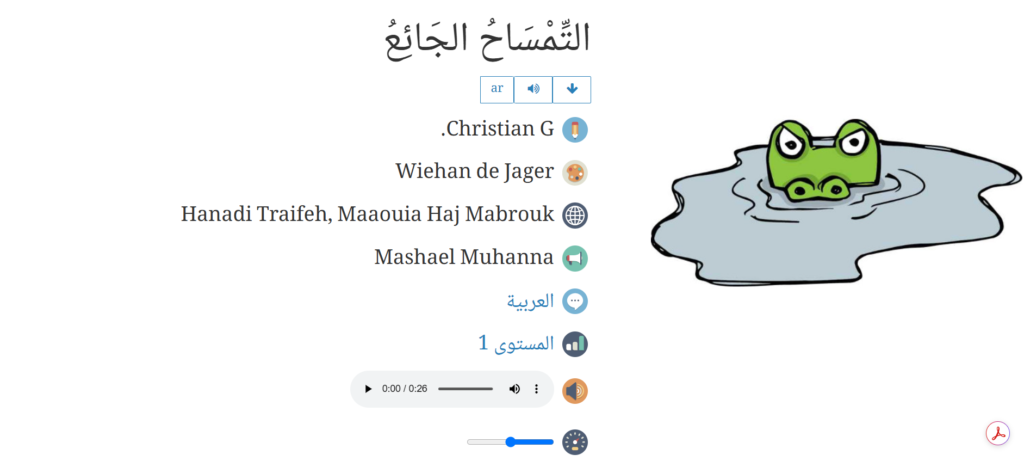
3. التِّمْسَاحُ الجَائِعُ (The Hungry Crocodile) If Your Child Is Still Getting Used to Letters
التِّمْسَاحُ الجَائِعُ (The Hungry Crocodile) is short enough to finish in one sitting, which is what turns a nervous child into a willing reader.
This is a level-one story with one simple problem and a fast ending. Nothing in it is complicated, and that is the point.
Animal stories work well this early because your child already knows the animal names from speech. Only the reading is new, and that removes half the difficulty from every page.
Finishing matters more than parents realise. A child who says “I read the whole thing” will ask for another book. A child who gives up halfway will avoid the next one.
Read it again two days later. The second reading builds fluency, and the third brings expression. When your child reads the crocodile’s line like a crocodile, the words have stopped being a struggle.
One rule for all three books: Read three or four books at one level before you move up. Staying at one level is what makes words automatic, and automatic words are what make reading feel easy.
Jumping between levels feels like progress but slows children down. They never meet the same words often enough to own them.
Move up only when the Five-Word Check comes back clean twice in a row. One easy book can be luck. Two is a signal.
You may also like: The Best Arabic Books For Kids
The Three Things That Make an Arabic Story Easy to Read
“Easy” has little to do with page count. A 12-page book can be harder than a 24-page one. It depends on how the words are written and how long the sentences are. Three features do most of the work: vowel marks, picture support, and simple Fusha. Check these three before you check anything else.
Once you know them, you can judge a book in a bookshop in under a minute. You can also judge a free online book from one screenshot.
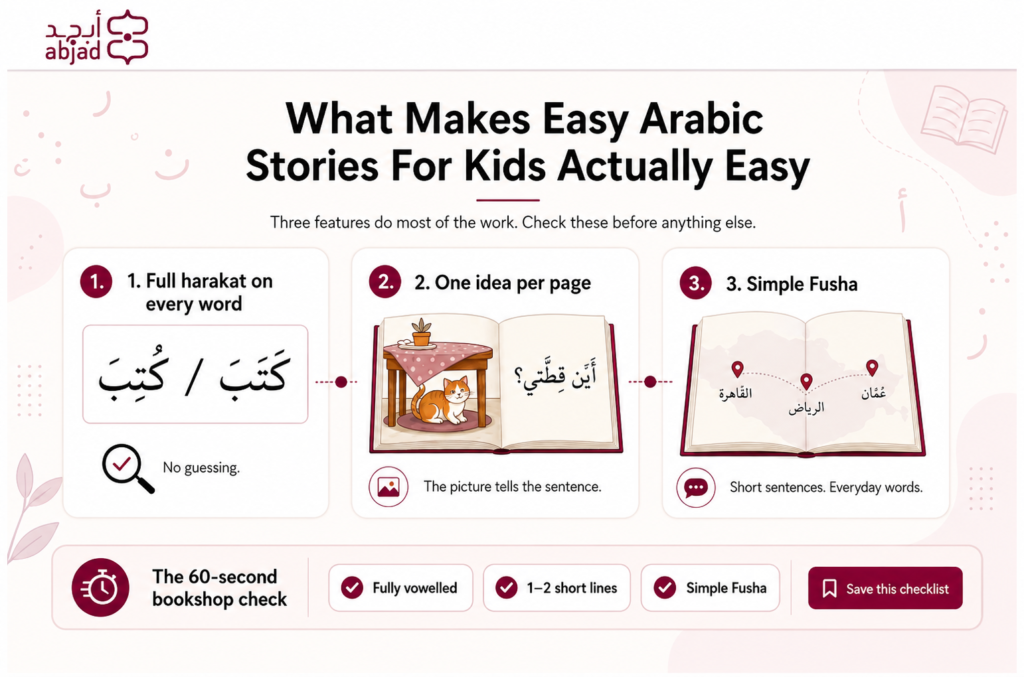
1- Full Harakat on Every Word, Not Just the Long Ones
Harakat are the small vowel marks written above and below Arabic letters. A beginner cannot read an Arabic word correctly without them. The reason is simple. The same three letters can be read several different ways. The vowel marks tell your child which way is right.
Take the letters ك‑ت‑ب. With one set of marks they read kataba, meaning “he wrote.” With another set they read kutiba, meaning “it was written.” Without marks, your child has to guess, and guessing turns reading into a game of luck.
Look for books labelled مُشَكَّل, which means fully vowelled. Every word carries its marks, so nothing is left to guessing.
Check the small words too, not just the long ones. Many publishers mark the nouns and verbs but leave prepositions and pronouns bare, and those are exactly the words a beginner trips on. Books with only some marks come later. Your child is ready for those once they know common words by sight.
That shift usually happens after a child has read many books at one level. You will notice it yourself: they stop sounding words out and start saying them whole.
2- Pictures That Match The Words, And Only One Or Two Lines Per Page
In a good early reader, the picture tells the sentence. A child who sees a cat under a table can read أَيْنَ قِطَّتِي؟ with help from what they see. That help matters more than it sounds. It means your child is decoding with support instead of guessing blindly.
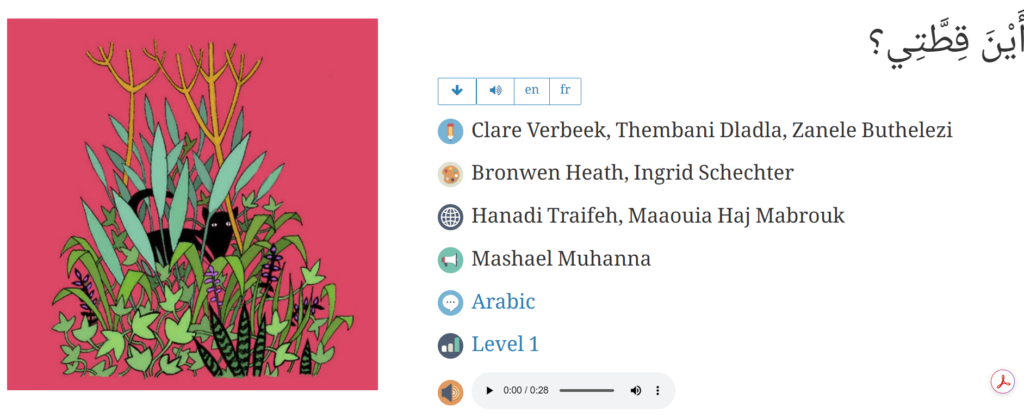
It also means they can finish the book on the first try. Finishing is what makes a child ask for a second book. Count the sentences on one page before you buy. One or two short lines is right for a first reader, and four lines are already a step up.
Watch where the text sits, as well. Text placed in the same spot on every page helps the eye settle, while text scattered around the picture pulls attention away from the words. Skip books where the picture shows a mood but not the action. Those are read-aloud books, not first readers.
You can still use those books. Just read them to your child yourself, and save the picture-led ones for their own reading turn.
3- Stories Written in Simple Fusha, Not Dialect Language
Easy Arabic stories for kids should be written in simple Fusha, or Modern Standard Arabic. Fusha is the shared written language across the Arab world. It is the language of school books, newspapers, and the Quran. So every hour your child spends reading it pays off later.
A child who reads Fusha well can pick up a book printed in Cairo, Riyadh, or Amman and read it the same way. A child trained only on dialect cannot. Simple Fusha is not heavy classical Arabic. It means short sentences, present-tense verbs, and everyday nouns.
Watch out for old collections of folk tales sold as children’s books. The stories are lovely, but the language is often long, formal, and far above an early reader.
A good test: read one page aloud. If it sounds like something a teacher would say to a child, the level is right. If you find yourself pausing to work out a phrase, your child will stall on it too. Put the book aside for a year and pick something plainer for now.
You may also like: Is Quranic Arabic Different from Normal Arabic? A Complete Comparison
How To Match An Easy Arabic Story To Your Child’s Level
Age and reading level rarely match for Arabic learners. This is even more true for children living outside Arabic-speaking countries. So, match the book to the skill, not to the birthday. Two tools make this easy.
The first is a quick check you run in the shop or on screen. The second is a rule about which skill you are testing.
1- Use the Five-Word Check to Pick the Right Story for Your Child
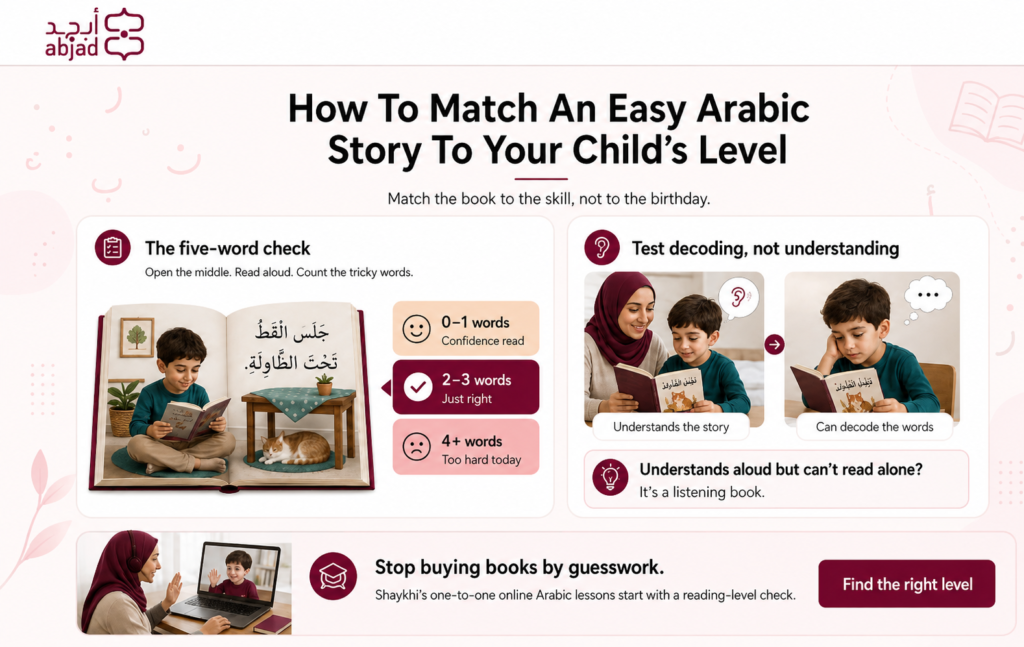
Open the book to a middle page. Ask your child to read it out loud. Count the words they cannot read. Use a middle page, not the first one. First pages are often the easiest in the whole book, so they make every title look like a good fit.
Zero or one word means the book is too easy. It is still useful for building speed and confidence, but it will not teach much. Two or three words is the right level. Your child is stretched but not stuck.
Four or more words means the book is too hard today. Put it back and go down one level. You can return to it in a few months. Count only the words your child truly cannot read. A word they get after a slow try still counts as read.
Stay quiet during the check. If you help, you are testing yourself and not your child. Run the check again every two months or so. Reading level moves faster than most parents expect, and a book that failed in March can pass easily by May.
Do the same check on free online books before you print or bookmark them. One page on the screen tells you as much as a page in a shop.
2- Match the Story to Your Child’s Reading Level, Not Their Listening Level
Many bilingual children understand spoken Arabic far better than they can read it. That gap fools a lot of parents. They buy books that match what the child understands. The child then meets a page they cannot decode, and their confidence drops.
Decoding means turning the letters and vowel marks into sounds. Understanding means knowing what those sounds mean. They are two different skills, and they grow at different speeds.
Here is the rule. If your child follows the story when you read it aloud but cannot read it alone, it is a listening book. Keep both kinds at home. Just use them for different jobs. Listening books can stay well above your child’s reading level. That is where new vocabulary and longer sentences come from.
Books your child reads alone should match the level from the five-word check. At that level, reading gets faster and smoother with every book.
Keep the two kinds of books apart. Put them on two shelves, or in two folders on the tablet. Label one shelf “I read these myself.” Label the other “You read these to me.” Your child will know which is which without asking.
Children respect that split once you explain it. It also removes the argument over books that are too hard.
This is where a teacher saves you money. Abjad’s one-to-one online Arabic lessons start with a reading-level check, so you stop buying books by guesswork.
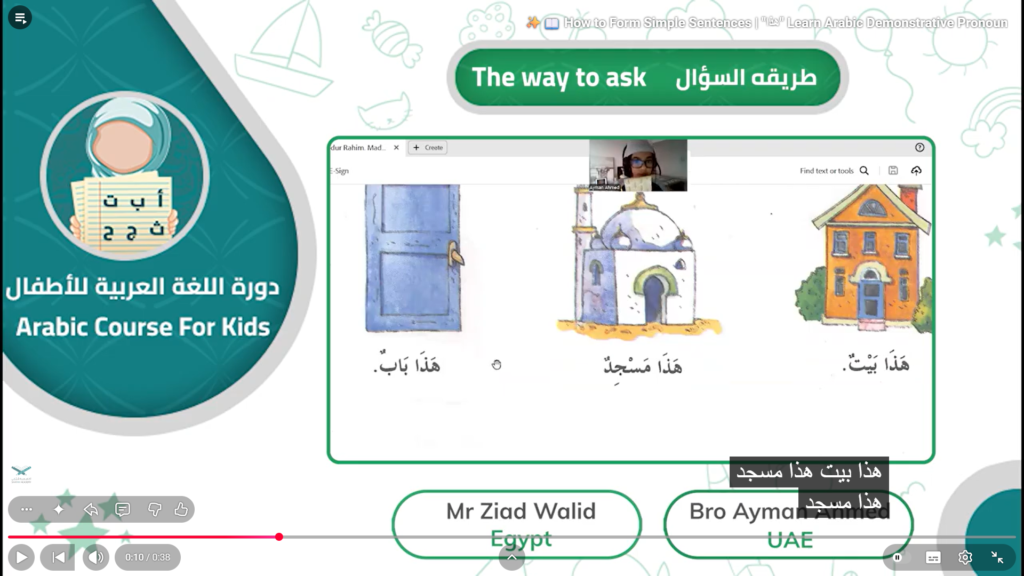
Watch a real-life reading class with our student
📖 How to Form the Question “ما هذا؟” in Arabic | Arabic for Kids 🎙️✨
Read also: How to Teach Kids Arabic in the UAE? – A Parent’s Step-by-Step Plan
Where To Find Easy Arabic Stories For Kids Online
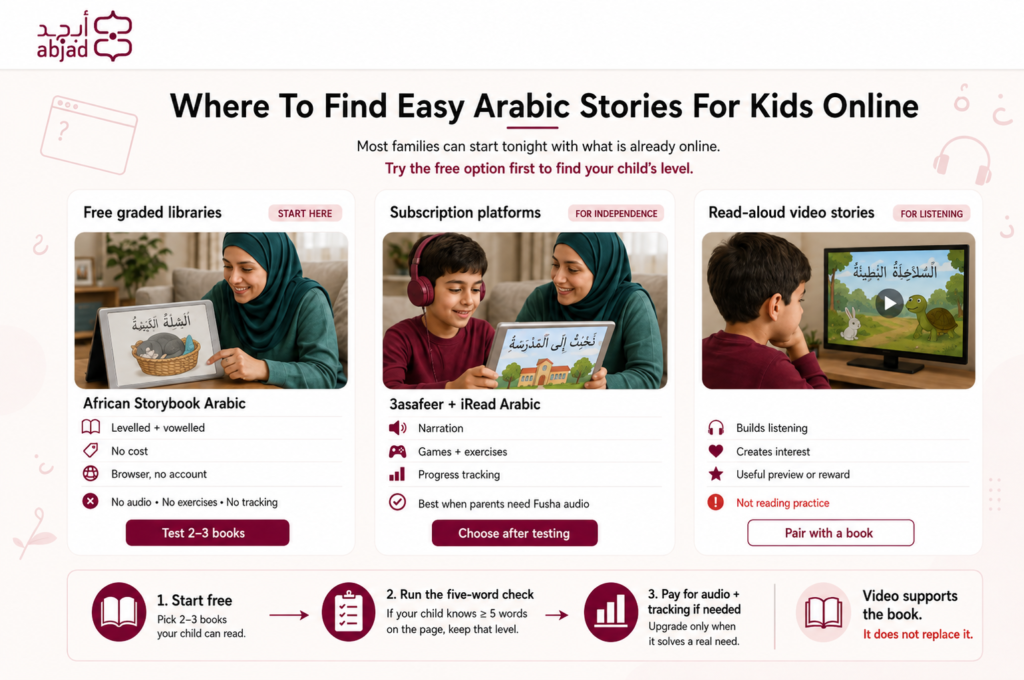
You do not need to order books from abroad. Most families can start tonight with what is already online. The options fall into three types. Each one does a different job, and most families end up using two of them.
Try the free option first. It tells you your child’s level before you pay for anything.
1- Free Arabic Story Websites
The African Storybook Arabic library offers levelled stories with full vowel marks, and all of them are free. That makes it the cheapest way to find your child’s level. Read two or three books there, run the Five-Word Check on each, and you will know where your child sits within a week.
The books open in any browser. There is no login and nothing to install, so you can start tonight. Level 1 alone holds more than a dozen titles, which is enough for a first month of reading.
What you do not get is audio, exercises, or any record of what your child has read. You also choose every book yourself, so nothing tells you what to read next.
That is fine at the start. It becomes a problem once you want your child reading on their own. The simple fix is to keep your own list in a phone note: the title, the date, and how the check went.
2- Paid Arabic Reading Platforms
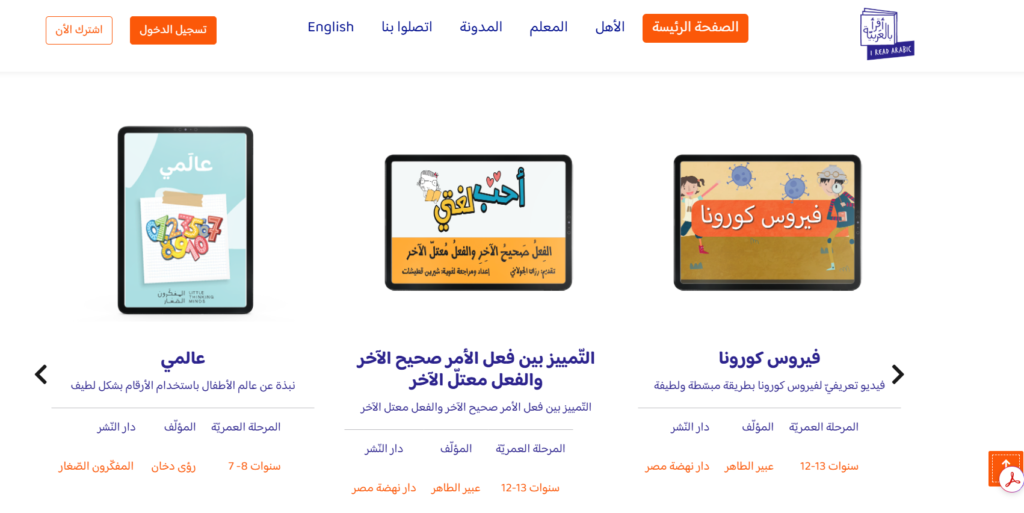
3asafeer and iRead Arabic are Arabic reading platforms built for children. Each one combines levelled books with narration, cartoons, games, and exercises.
3asafeer levels its library using Arabi21, a recognised system for grading Arabic children’s books. That keeps the levels consistent, so your child can read twenty books in a row without suddenly hitting one that is far too hard. Every book feels like a small step.
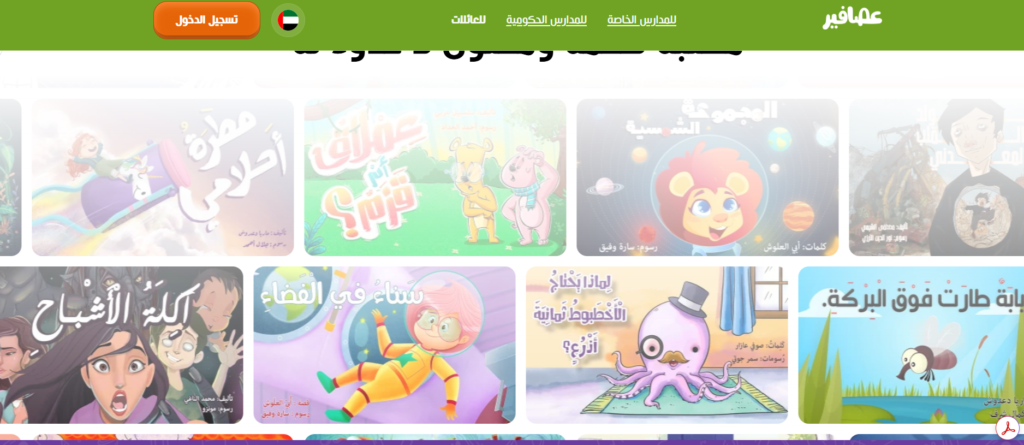
Narration is the main reason to pay. A trained voice reads each book aloud in clear Fusha, so your child hears the right pronunciation even on days you cannot sit with them. That matters most if you do not feel confident reading Arabic yourself.
The tracking helps too. You can see the level your child is actually reading at, instead of guessing. Both platforms offer free samples, so try one before paying for a year. Check whether the plan covers one child or several, since a family plan usually costs less per child.
One warning: the games can pull attention away from the books. Agree with your child that reading comes first, then games.
3- Animated Arabic Story Videos on YouTube
Animated Arabic story channels build listening skills and make children ask for more stories. They are useful, but they are not reading practice. During a video, your child’s eyes are on the picture, not on the words.
Use them as a support, not a replacement. A video works well before a book, as a preview of the story, or after it, as a reward for finishing.
Choose channels that speak in clear Fusha, not dialect. Listen to one minute yourself before you press play. Keep sessions to about ten minutes, because long viewing turns active listening into passive watching.
Ask one or two questions in Arabic afterwards. That small step turns watching into learning. You will know the balance has slipped if your child asks for stories but never opens a book. When that happens, cut the videos for a week.
Read also: Daily Routine in Arabic for Kids
Watch Our Classes in Action
Curious what a real session looks like? Take a peek inside our interactive classrooms and see how our expert instructors bring the Arabic language to life. Watch a sample lesson below!
Begin Your Arabic Journey in the UAE
Join Abjad Institute for a professional and immersive Arabic language experience tailored to your goals.
Book Your Free TrialRead One Story Three Times, and Each Time for a Different Reason
Most families read a story once and move on to the next one. That is the single easiest habit to fix. One story read three ways teaches more than three stories read once. Each pass trains a different skill.
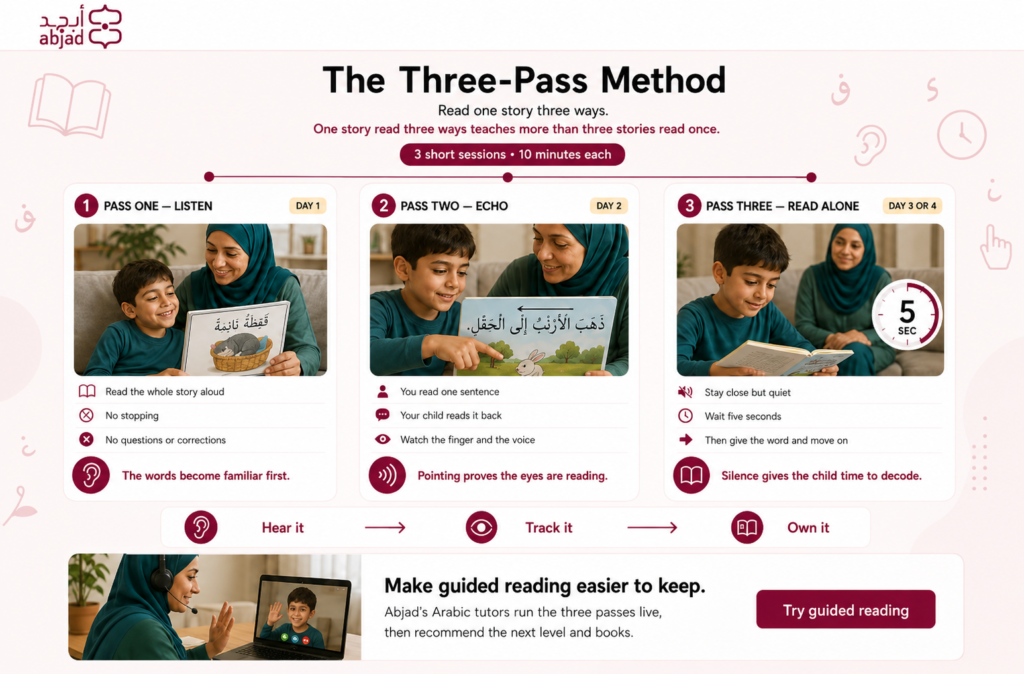
The method takes about three short sessions spread over a few days. Ten minutes each is enough.
1. Pass One — You Child Listens While You Read Aloud
You read the whole story aloud. Your child just looks at the pictures and enjoys it. No stopping. No questions. No corrections. Read at a normal speed, not a slow teacher voice. Your child needs to hear how the sentences flow.
Let them hold the book and turn the pages. That small job keeps their attention on the page. This pass puts the words and the story into your child’s memory. When they later see those words in print, the words are already familiar.
It also removes the fear. A child who already knows the story is not afraid of the page. If your child asks what a word means, answer in one short sentence and keep reading. Long explanations break the flow.
Skipping this pass is why so many first readings turn into a struggle. You can do this pass at bedtime, when nobody is trying to learn anything. That is often the easiest ten minutes of the day to find.
b. Pass Two — Your Child Repeat Each Sentence
You read one sentence. Your child reads the same sentence back while pointing at each word. Continue to the end of the book. The pointing is not optional. It forces the eye to move right to left across the real letters.
Use a finger or a pencil, whichever your child prefers. Some children track better with a bookmark held under the line. Without it, many children recite the sentence from memory. It sounds like reading, but no reading is happening.
Watch the finger, not just the voice. If the finger and the voice do not match, slow down. Read the sentence again yourself if they lose the line. There is no cost to repeating a sentence twice.
Keep this pass short. Half the book is fine if your child starts to tire. Do not correct pronunciation during this pass. Just read the sentence again correctly and let them copy you. Stop while your child is still enjoying it. Ending early keeps them willing to come back tomorrow.
c. Pass Three — Your Child Reads With No Help
A day or two later, your child reads the whole story with no help. You sit close but stay quiet. When they get stuck, wait at least five seconds before you say anything. Count it in your head. Five seconds feels long to you. To your child, it is just enough time to work the word out.
That silence is hard for parents and valuable for children. Helping too fast teaches a child to wait for you instead of working the word out. If they still cannot get it after five seconds, give the word and move on. Do not turn it into a lesson.
Praise the effort, not the result. “You worked that word out yourself” means more than “well done.” Note any word they missed twice, and read that word together at the end. One or two words is plenty.
Let them read the same book to someone else the next day. Repeating a book they can already read builds real confidence. When this passes smoothly by reading two books in a row, your child is ready to move up a level.
Holding this routine three times a week is hard in a busy house. Abjad’s Arabic tutors run this guided reading with your child live, one-to-one, and fix the sounds as your child reads them.
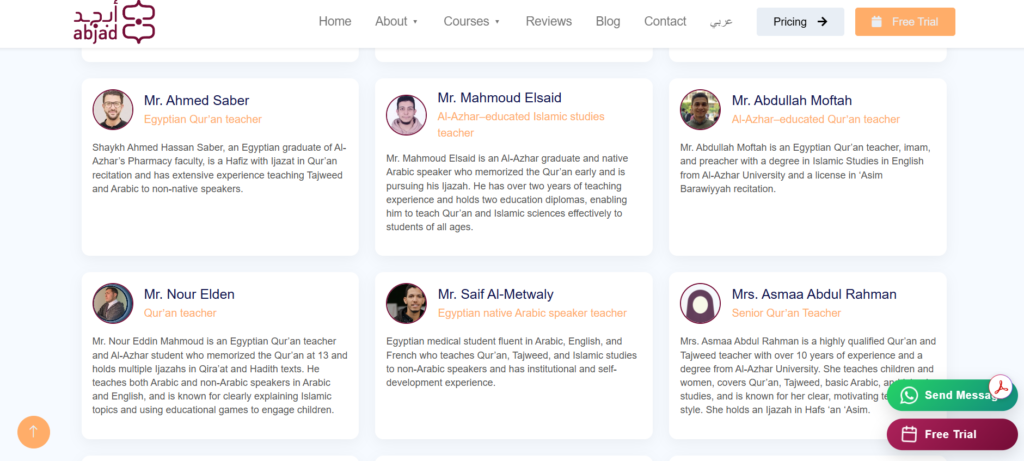
Abjad’s teachers are all native Arabic speakers, most of them Al-Azhar graduates, with up to 13 years of teaching behind them. Several also hold ijazah in Tajwid and Quran recitation, which is exactly the training that makes a teacher hear a wrong letter the moment it slips out.
. Have a look at our tutor and see by yourself.
Common Mistakes Parents Make With Arabic Reading at Home
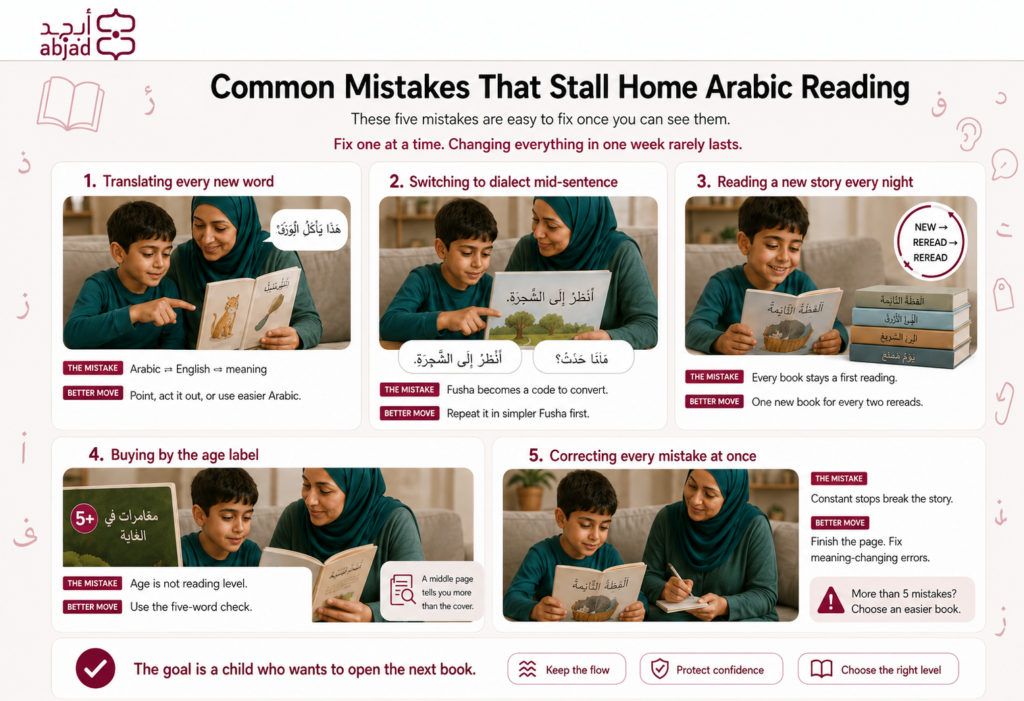
These five mistakes come up again and again with families. Each one is easy to fix once you can see it. None of them is about effort. Parents who make them are usually the ones trying hardest. Fix one at a time. Changing everything in one week rarely lasts.
1- Translating Every New Word to Your Child While Reading
Translating breaks the flow of Arabic in your child’s head. It also teaches them that every Arabic sentence needs an English step. Point at the picture instead. Act the word out, or say it again in easier Arabic.
Most early-reader words are things you can show. A cat, a door, a spoon, a hand — all of these can be pointed at. Your child does not need to understand every single word. They need to understand the page, and one unknown word rarely blocks that.
Ask a simple Arabic question instead of translating, such as ماذا يفعل الولد؟ The answer shows you whether they followed the story. Save translation for the words you truly cannot show. That will be fewer words than you expect.
Words like “kindness” or “later” are fair to translate. Everyday nouns are not. If your child translates out loud on their own, do not stop them. Just answer back in Arabic and keep going.
2- Mixing Fusha and Dialect Language in the Same Sentence
Reading a Fusha line and explaining it in dialect is fine now and then. Doing it on every page is not. It teaches your child that written Arabic is a code that always needs converting. That habit is slow to undo.
Children who grow up this way often read Fusha fluently but understand almost nothing of it. Reading turns into decoding with no meaning attached. Try repeating the Fusha sentence more simply before you switch. Often that is enough.
Pick two or three Fusha phrases and use them every reading session. Good ones are انظر إلى الصورة (look at the picture) and ماذا حدث؟ (what happened?). Saying the same phrases each time makes your child understand them quickly.
Explain to your child that books use their own kind of Arabic. Tell them it is the Arabic of school and stories, and that people speak differently at home. Once they know this, they stop expecting the book to sound like the family.
Choose books whose Fusha is close to spoken Arabic. Simple present-tense stories feel much less foreign than formal ones. Do not panic if you slip into dialect. One or two explanations per book will not undo the habit.
Read also: Arabic Vocabulary for Kids – The First 300 Words- In the Right Order
3- Reading A New Story Every Night
Rereading feels boring to adults. To children, it feels like winning. Keep a favourite in rotation until your child reads it smoothly and with expression. That smoothness is fluency being built.
Fluency only appears on the second or third reading of the same text. A new book every night means your child stays at first-reading level forever. A good rule: one new book for every two rereads.
Let your child choose the book to reread. Choice is what keeps them willing to open it again. Change the job instead of the book. Tonight they read it to you, tomorrow to a sibling, the day after into your phone recorder.
Retire a book once your child reads it with no effort at all. At that point it has done its work. Keep four or five books in the rotation, not twenty. A small pile is easier to finish and easier to feel proud of.
4- Buying Books by Age Label Instead of Reading Level
Age labels on Arabic children’s books assume a native speaker in an Arabic-medium school. Most learners are not that child. A “5+” label can be far too hard for a seven-year-old learning at home. It can also be too easy for another.
Publishers set these labels for listening age as often as reading age. The two are rarely the same for a bilingual child. Ignore the label and run the five-word check. It takes thirty seconds and it is always right for your child.
Look inside the book before you buy, even online. One clear photo of a middle page tells you more than the label does. Beware of beautiful hardback books with tiny, unvowelled print. They look like gifts and read like homework.
If a book turns out too hard, do not throw it away. Read it aloud to your child and shelve it for next year. Buy fewer books at the correct level rather than many at guessed levels. Your child will read the right ones again and again.
5- Interrupting Every Error Instead of Letting Your Child Finish
Note the mistake, finish the page, then go back to it. One or two corrections per page is plenty. Stopping at every error breaks the story. The child loses the meaning, and meaning is what keeps them reading.
Not every mistake matters equally. A wrong vowel ending changes little, but a wrong word changes the sentence. Fix the mistakes that change meaning and let the small ones pass. Many of them disappear on their own as reading gets stronger.
Correct by reading the word correctly yourself, then asking your child to repeat it. Avoid the word “wrong.” Constant correction is also the fastest way to make a child refuse the next book.
Watch your face as much as your words. A sigh or a raised eyebrow teaches a child that reading is a test. If a page has more than five mistakes, the book is too hard. Close it kindly and pick an easier one.
Inside Our Live Classes
Don’t just take our word for it—see for yourself! Click below to watch short clips from our live classes and meet the instructors who will guide your learning journey.
Begin Your Arabic Journey in the UAE
Join Abjad Institute for a professional and immersive Arabic language experience tailored to your goals.
Book Your Free TrialStart Your Child’s Arabic Reading Plan With Abjad Today
You now know how to pick the right story and how to read it three ways. The hard part is doing it every week, in a house that is already full. That is the part we take off your hands.
Your child gets a qualified Arabic teacher, one-to-one and online. Most of Abjad’s teachers are Al-Azhar graduates, and every one is a native speaker. The teacher checks the reading level in the first session, picks the right stories, and runs the guided reading with your child live.
No commute. No fixed timetable. No more buying books and hoping they fit. And you do not have to be the one correcting pronunciation any more. You get to go back to enjoying the story with your child.
Lessons run 30 or 45 minutes, one to five times a week, with early morning and late evening slots. Plans start at $18.99 a month, and your first class is free.
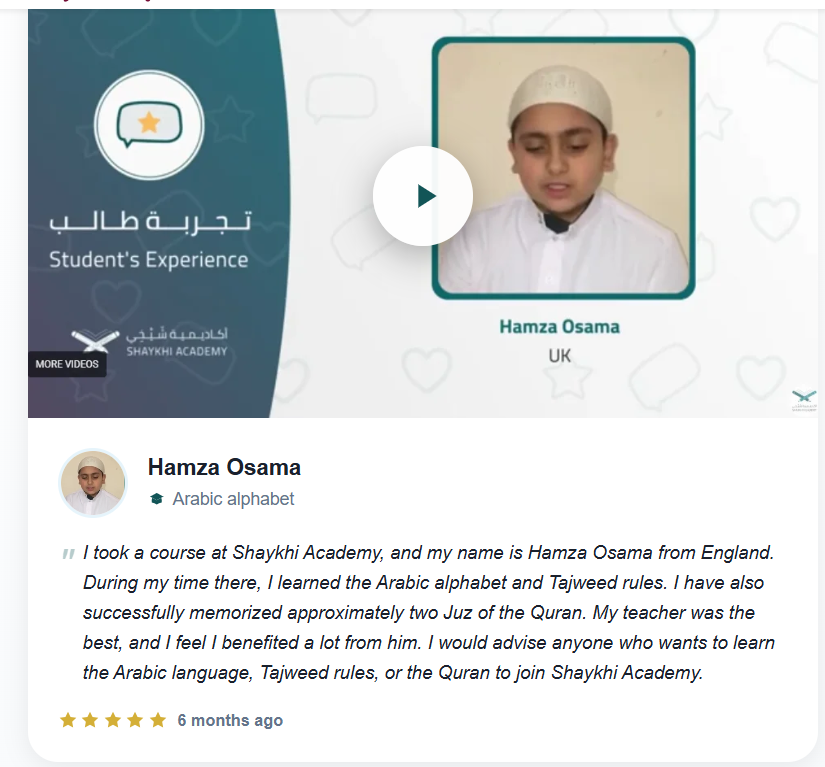
Before you decide, hear it from a student directly.
Book your child’s first lesson today. In a few months, the goal is simple: your child picks up an Arabic book and reads it to the end, alone.
Discover Our Arabic Courses
- Arabic Course for Kids
- Arabic Conversation for Kids
- Arabic Qaida for Kids
- Beginner Arabic for Kids
- Arabic Grammar for Kids
- Teen Arabic Summer Course
- Arabic Kids Camps
- UAE Kindergarten Arabic Classes
- Modern Standard Arabic Course
- Fusha Arabic Course
- Classical Arabic Course
- Emirati Arabic Course
- Gulf Arabic Course
- Learn Saudi Arabic
- Business Arabic Course UAE
- Arabic Language Classes for Professionals in UAE
- Quranic Arabic Course
Conclusion
Easy Arabic stories for kids work when three things line up. The text is fully vowelled and written in simple Fusha. The level fits the five-word check, not the age label. And the same story gets read more than once.
Start free. Open a level-one library, read a few books, and find out where your child really is. That step costs nothing and saves you from buying the wrong books.
Add a graded platform when you need narration and exercises. That matters most if you are not confident reading Fusha aloud yourself. Then, keep the routine small. One story, three passes, ten minutes at a time. Small and regular beats long and rare, every week of the year.
Watch out for the five mistakes, especially translating everything and changing books every night. Those two undo more progress than any other habit. Expect slow weeks. Reading progress is not smooth, and a child who reads well in March can stall in April. Stay at the level and keep going.
One last thing worth remembering. The measure of progress is not how many Arabic stories your child has heard. It is whether they can pick up a levelled book and read it to the end on their own.
Frequently Asked Questions
At what age should a child start reading Arabic stories?
Children can start listening to Arabic stories from about age two. They can start reading simple vowelled stories once they know the letters and vowel marks, often between five and seven. Listening should always start earlier than reading.
Should easy Arabic stories be in Fusha or dialect?
Easy Arabic stories for kids should be in simple Fusha. Fusha is the written language your child will meet in school books and in the Quran. Keep dialect for talking, not for reading practice.
How long should a daily Arabic reading session be?
Ten to fifteen minutes a day works better than one long weekend session. Short daily practice is what makes word recognition automatic. Regular beats long.
Can my child learn Arabic from story videos alone?
No. Videos build listening and vocabulary, but reading needs your child’s eyes on vowelled text. Use videos alongside books, not instead of them.
What if my own Arabic is not strong enough to read aloud?
Use stories with professional audio narration, or let a tutor do the reading passes with your child. Your job at home can be the routine and the encouragement instead of the pronunciation.






Leave a Reply