 Learn Arabic
You have read the translation of an ayah many times. Then, someone points at one small vowel mark on one word. That mark decides who fears whom in the verse. The ayah opens up in a way no translation gave you.
This is why Arabic grammar for Quran study matters. A word ending in Arabic tells you who did the action and who received it. Grammar is the tool that reads it. Miss the ending, and you can miss the point of the verse.
This is not grammar for its own sake. Classical scholars counted naḥw as a required tool for tafsīr. The reason is simple: when the parsing changes, the meaning changes. Al-Zamakhsharī said anyone explaining the Quran must be “a horseman in the science of iʿrāb.” Makkī ibn Abī Ṭālib said knowing iʿrāb is what makes the meaning clear.
Many learners get stuck right here. They know the letters. They recite well. But, the sentence still feels closed to them. That gap is grammar, not vocabulary. And it closes faster than most people expect, once you study in the right order.
Thus, let’s have a look at four verses where one vowel changes the meaning. Then, we highlight a simple three-step method to use while you read. After that, we show the exact study order, so you reach the Quran in the shortest time.
What you’ll learn
- What nahw, ṣarf, and iʿrāb each do inside a Quranic sentence.
- Four verses where one vowel changes the meaning, including one that changes a fiqh ruling.
- The Harakah Test, a three-step reading method you can use daily.
- The correct study order, from Al-Ājurrūmiyyah to applied Quranic iʿrāb.
- The five mistakes that stall most self-taught learners.
What You Are Actually Learning When You Study Arabic Grammar for the Quran
Arabic grammar for Quran is the study of naḥw and ṣarf applied to the Quranic text. Its goal is simple. You learn to see sentence roles, read word endings correctly, and recover the meaning the structure carries. It is a reading tool, not an academic hobby.
The field splits into two sciences. Each answers a different question. Most learners mix them up at the start, and that mix-up costs months.
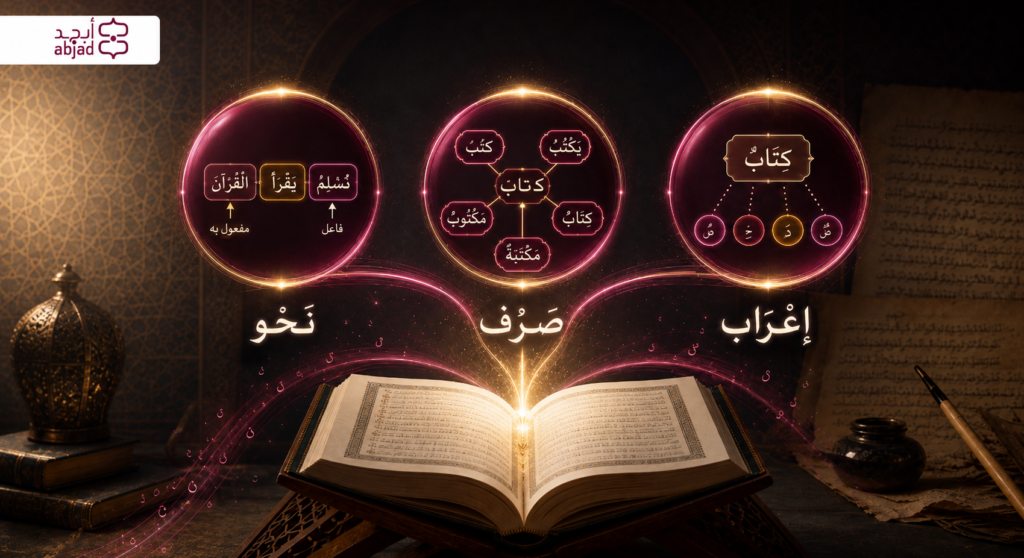
1- Nahw, Ṣarf, and Iʿrāb: What Each One Does
Naḥw is the science of how words work inside a sentence. It tells you which word is the doer, called the fāʿil.
It tells you which word receives the action, called the mafʿūl bihi. It also shows you the core of a nominal sentence, the mubtadaʾ and the khabar. Once you can name these parts, a long verse stops feeling like a wall of words.
Ṣarf is the science of word forms. It explains how one root builds many patterns, and how each pattern carries its own meaning. Take Sūrat al-Baqarah 2:222. The verse uses (يَطْهُرْنَ) and then (تَطَهَّرْنَ). These are not the same word:
- The first describes a natural state that happens by itself.
- The second describes a deliberate act the person performs. Both conditions must be met, and ṣarf is what shows you that.
Iʿrāb is the visible result of all this. It is the ending that appears on the word because of the job it does.
The four states are rafʿ, naṣb, jarr, and jazm. Ibn Jinnī defined iʿrāb as clarifying meanings through wordings. Al-Azharī, author of Tahdhīb al-Lugha, explained that iʿrāb and taʿrīb both mean the same thing: making something clear. he ending exists to show the meaning. Move it, and the meaning moves with it.
2- How the Quran Led to the Birth of Nahw (Arabic Grammar)
Arabic grammar was written down because of a mistake in reciting the Quran, not to serve poetry. The well-known reports name Abū al-Aswad al-Duʾalī as the man asked to set the rules. He had watched Arabs mix with non-Arabs, and heard the language start to slip.
The moment that forced the decision was public. One man got a case ending wrong in front of the governor of Basra. In another report, a bedouin misread a verse of Sūrat al-Tawbah and said something no Muslim could accept. The order followed: write down rules that protect how people read and speak.
That beginning explains the shape of the whole field. Arabic grammar was built to guard the Book, so its rules fit Quranic sentences far better than they fit everyday modern speech.
This is why learners who study Quranic Arabic grammar directly start understanding verses sooner than those who begin with general conversation courses.
Read also: How to Learn Egyptian Arabic in the UAE
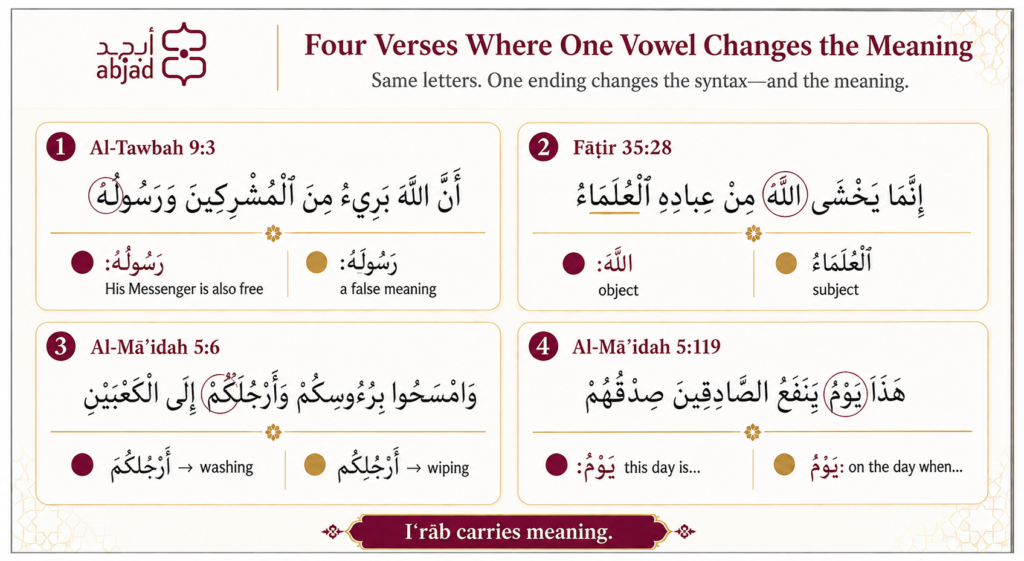
Four Quranic Verses Where a Single Vowel Changes the Meaning
Let’s see to what extent Arabic grammar matters. And what actually goes wrong without grammar. In each case below, the letters are identical. Only the ending changes. And each change moves the meaning.
1- Sūrat Al-Tawbah 9:3 — The Verse That Started The Science of Nahw
This verse is one of the most famous examples used to show why Arabic grammatical endings matter when reading the Quran.
A single change in the final harakah can completely alter the relationship between the words and, consequently, the meaning.
﴿أَنَّ اللَّهَ بَرِيءٌ مِنَ الْمُشْرِكِينَ وَرَسُولُهُ﴾
“Allah and His Messenger are free of the polytheists.” Sūrat Al-Tawbah 9:3
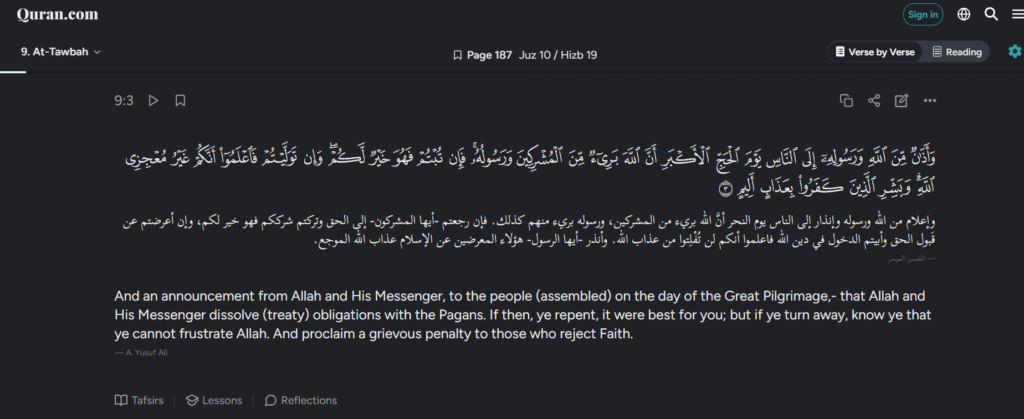
Look at the word رسولُه. It carries rafʿ, a ḍammah. That ending joins it to بريءٌ. So the meaning is clear: God is free of the polytheists, and His Messenger is free of them too.
Now imagine the same word with a kasrah. The ending would join it to المشركين instead. The verse would then say something no Muslim can accept. Not one letter has changed, only one mark.
A well-known report in Nuzhat al-Alibbāʾ by Ibn al-Anbārī describes a bedouin who heard a reciter read this word with a kasrah. He objected at once and said that if Allah were free of His Messenger, he too would be free of him.
The report ends with an order to write down the rules of the language. Historians record more than one version of how the science began, but they all share the same cause: protecting how the Quran is read.
2- Sūrat Fāṭir 35:28 — One Harakah Can Change Who Fears Whom
This verse demonstrates how Arabic case endings identify the doer and the object even when the usual word order is reversed. The grammatical structure makes it clear that the
﴿إِنَّمَا يَخْشَى اللَّهَ مِنْ عِبَادِهِ الْعُلَمَاءُ﴾
“It is only those who have knowledge among His servants who fear Allah.”Sūrat Fāṭir 35:28
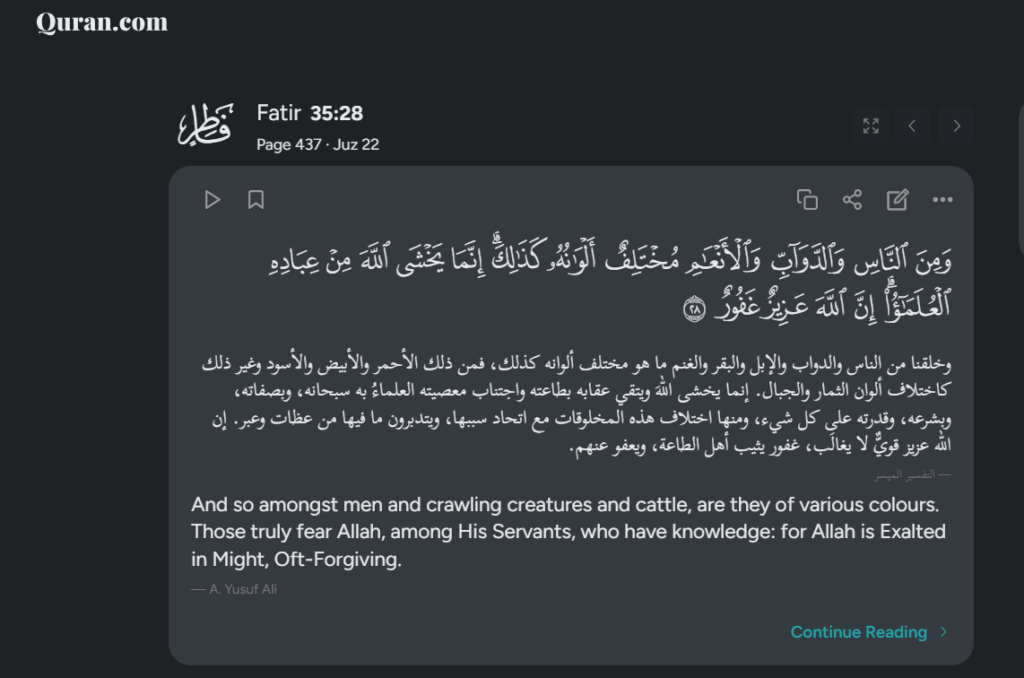
This verse puts the object before the doer. So, word order gives you no help here at all. The endings are carrying the entire meaning on their own.
الْعُلَمَاءُ is in rafʿ, so the scholars are the ones who fear. اللَّهَ is in naṣb, so it is the one feared. The meaning is that the scholars fear Allah, not the reverse. Read those two endings backwards and you produce the opposite claim. Nothing in the letters stops you. Only the ḥarakah does.
There is a second layer here as well. Placing the object first signals restriction, and إنما strengthens it. So the verse is not only saying that scholars fear Allah. It is saying that true fear belongs to them in particular. That extra meaning only appears once you can read the structure.
3- Sūrat Al-Māʾidah 5:6 — One Word with Two Different Harakat Has Two Different Islamic Rulings And Meanings
This verse is central to the Quranic instructions concerning wuḍūʾ. Its grammatical structure has therefore received extensive attention from scholars of Arabic, tafsīr, and Islamic jurisprudence.
﴿وَامْسَحُوا بِرُءُوسِكُمْ وَأَرْجُلَكُمْ إِلَى الْكَعْبَيْنِ﴾
“And wipe your heads and wash your feet to the ankles.” Sūrat Al-Māʾidah 5:6
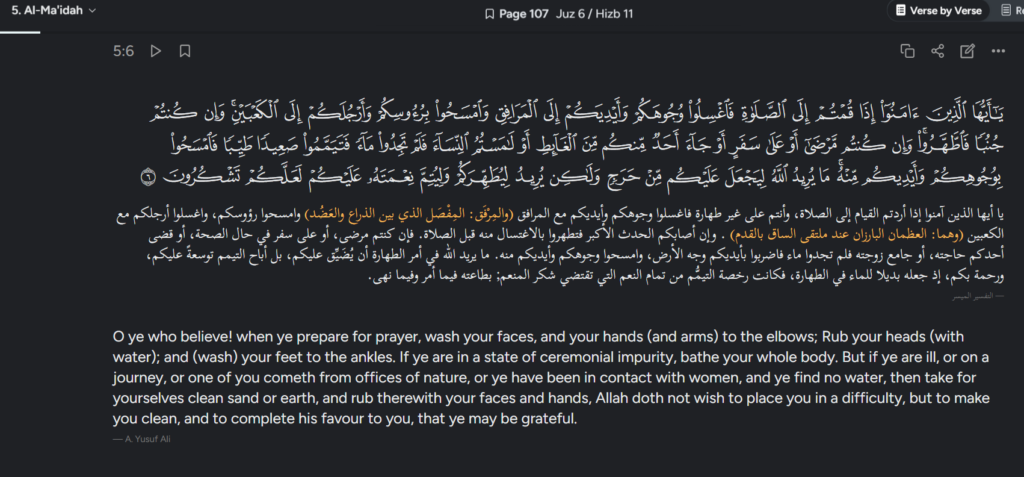
Focus on أَرْجُلَكُمْ. In naṣb, it joins وجوهكم and أيديكم. Those are the limbs you wash. So, the feet are washed in wuḍūʾ.
Read it in jarr instead, and it joins رءوسكم. That is the limb you wipe. The same word would then place the feet under wiping.
This is the clearest proof that grammar is not decoration. Two readings, two different acts of worship, one letter of difference. Scholars of tafsīr debated this on grammatical grounds, and the majority held the naṣb parsing.
The same verse raises a second question. The letter بـ in برءوسكم has more than one possible meaning in Arabic. It can mean “part of,” or it can just link the action to the head. That choice decides whether you wipe part of the head or all of it, and the madhhabs differ on it. One letter, one whole discussion.
Read also: Arabic Grammar for Beginners – A Step-by-Step Guide
4- Sūrat Al-Māʾidah 5:119 — One Word With Two Different Endings Has Two Sound Meanings
This verse provides another useful example of how Arabic grammatical endings shape the structure and interpretation of a Quranic sentence.
The grammatical position of يَوْم determines how the phrase connects to the surrounding statement.
﴿هَذَا يَوْمُ يَنْفَعُ الصَّادِقِينَ صِدْقُهُمْ﴾
“This is the Day when the truthful will benefit from their truthfulness.” Sūrat Al-Māʾidah 5:119
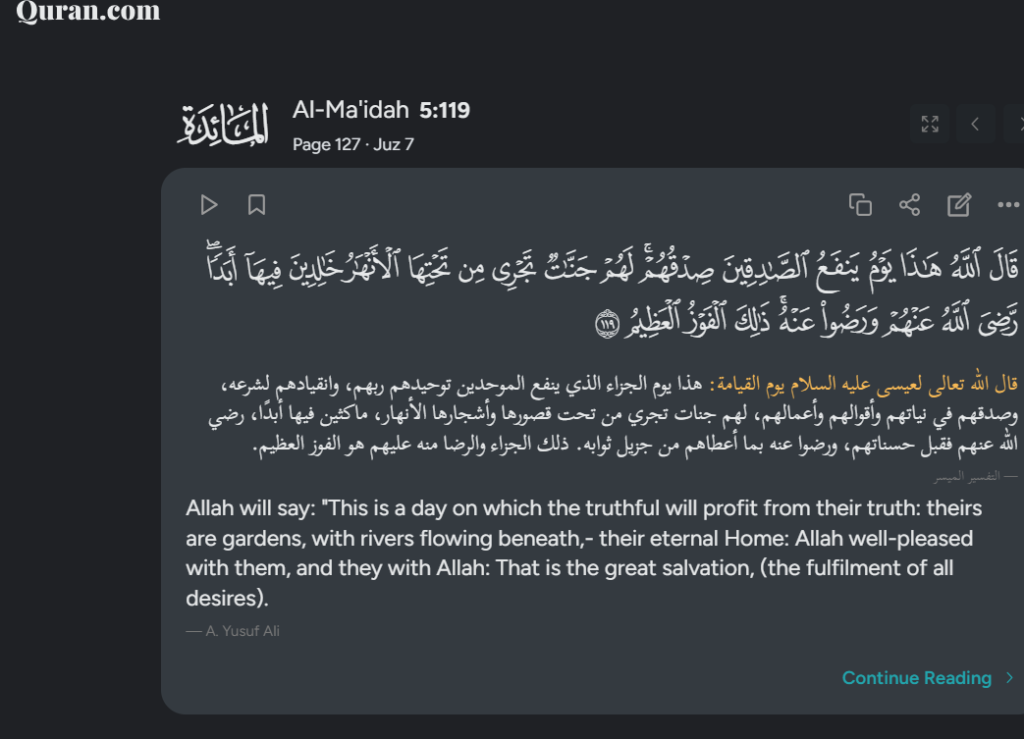
Nāfiʿ recited يَوْمَ with a fatḥah. That makes it an adverb of time. The meaning becomes: this reward happens on the day when the truthful benefit from their truthfulness.
The other reciters read يَوْمُ with a ḍammah. That makes it the predicate of هذا. The meaning becomes: this day is the day of their benefit.
Neither reading cancels the other. Both are authentic, and both add something. Differences in iʿrāb across the mutawātir qirāʾāt usually open extra meaning rather than create conflict.
Classical scholars treated this as a face of the Quran’s linguistic miracle. One text carries several sound parsings, and every one of them is correct Arabic. That is also why serious Quranic Arabic study covers qirāʾāt differences alongside grammar, instead of leaving you to meet them later as confusing footnotes.
The Harakah Test: Three Simple Steps to Read Any Ayah
Most learners memorize grammar tables and never carry them to the muṣḥaf. This simple framework closes that gap. Run these three steps on one ayah a day.
Step one: read for meaning first
Before you look at a single ending, ask yourself what the ayah is saying. Al-Zarkashī explained why: the endings follow the meaning, not the other way round. Start with the endings and you may end up with a tidy answer that is simply wrong
Step two: name the roles out loud
Ask who did the action and who received it. Then name the core of the sentence. Say the answer in one plain sentence before moving on.
Step three: change one vowel and see what happens
Pick the key word in the ayah. Now imagine it with a different ending, and ask what the verse would say then. Most of the time the meaning bends, or breaks completely.
That is the moment the rule stops being theory and becomes something you can see, exactly as it did for the bedouin who heard 9:3 read wrongly.
If this all feels confusing, that is normal. A private tutor handles the plan and the correction for you, so you only have to show up and study.
Abjad offers exactly that, with a free trial lesson to begin. Have a look at what your Arabic class will be in Abjad
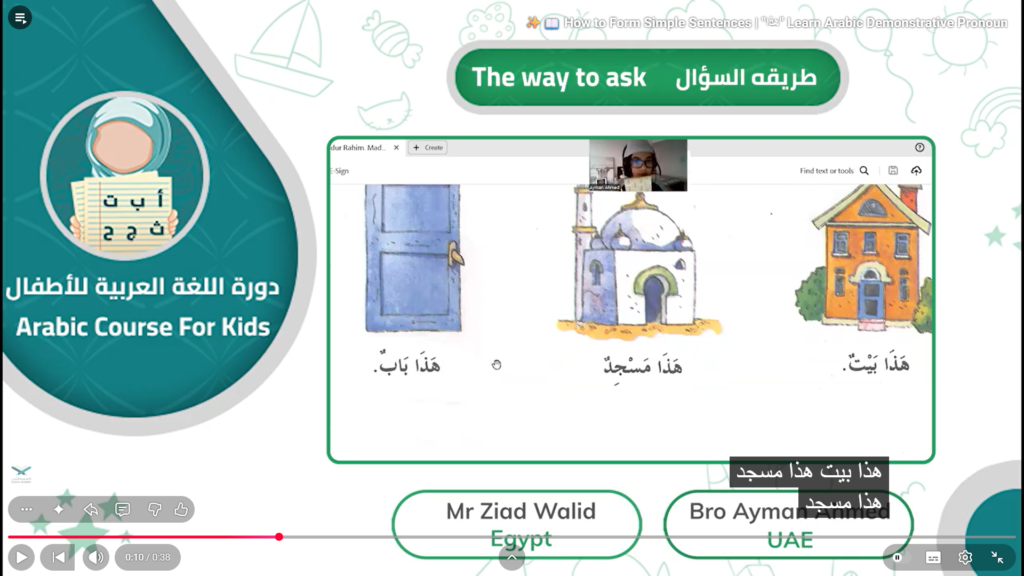
📖 How to Form the Question “ما هذا؟” in Arabic | Arabic for Kids 🎙️✨
The Right Order to Study Arabic Grammar for the Quran
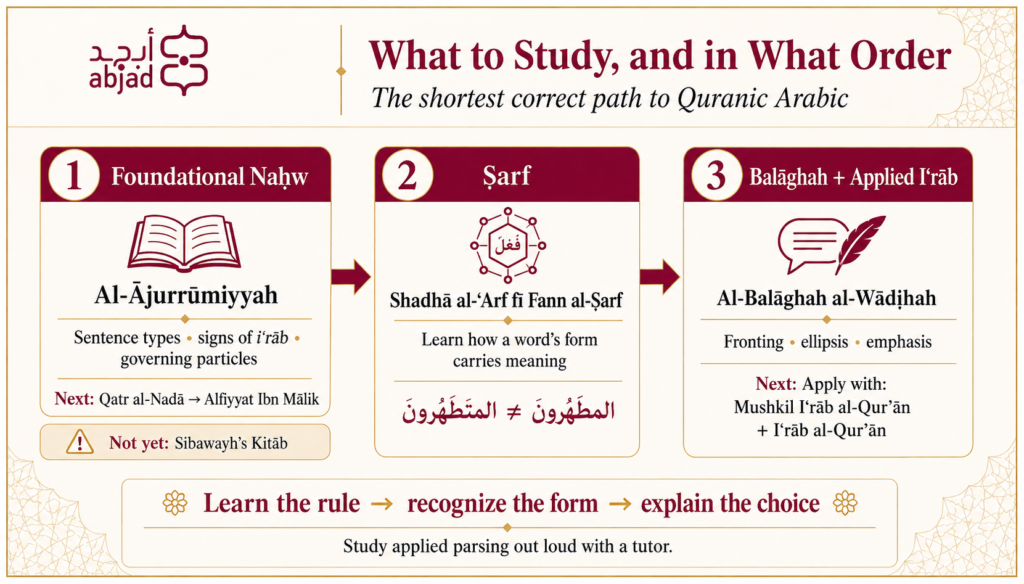
What is the shortest correct path for learning Arabic grammar for the Quran? The order below is the classical one, and it is still used in Azhar-track teaching today. Skipping a stage is the most common reason learners restart from zero.
1- Stage One — Studying Foundational Nahw
Start with Al-Ājurrūmiyyah. It is a short text, written to be memorized. It covers the types of sentences, the signs of iʿrāb, and the particles that govern word endings. That is exactly the material you need before any Quranic sentence becomes readable.
Do not study the bare text alone. Use a clear commentary with it, such as the explanation by Muḥammad Muḥyī al-Dīn ʿAbd al-Ḥamīd, or the one by Ibn ʿUthaymīn. A commentary turns a list of rules into examples you can copy.
After that, move up one level to Qaṭr al-Nadā, and later to Alfiyyat Ibn Mālik with a teacher. These add depth and cover the cases the first book leaves out.
Leave Sībawayh’s Kitāb alone for now. It is a reference for specialists, not a starting point. Beginning there is the fastest way to quit.
Read also: Free Arabic Grammar Course – The Best Options Online
Watch Our Classes in Action
Curious what a real session looks like? Take a peek inside our interactive classrooms and see how our expert instructors bring the Arabic language to life. Watch a sample lesson below!
Begin Your Arabic Journey in the UAE
Join Abjad Institute for a professional and immersive Arabic language experience tailored to your goals.
Book Your Free Trial2- Stage Two — Starting to Study Ṣarf
Only now does ṣarf pay off, because you finally have somewhere to apply it. The standard entry text is Shadhā al-ʿArf fī Fann al-Ṣarf. It is clear, short, and built for beginners.
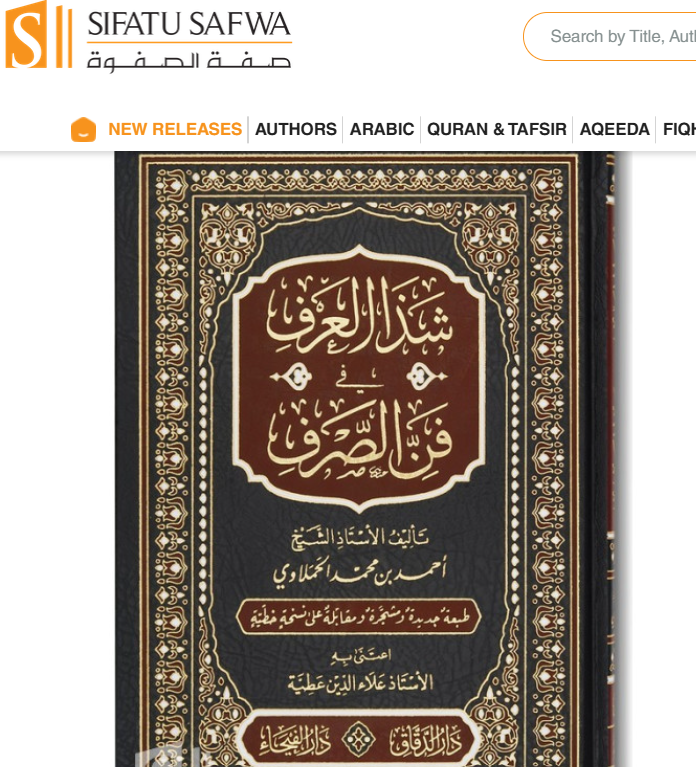
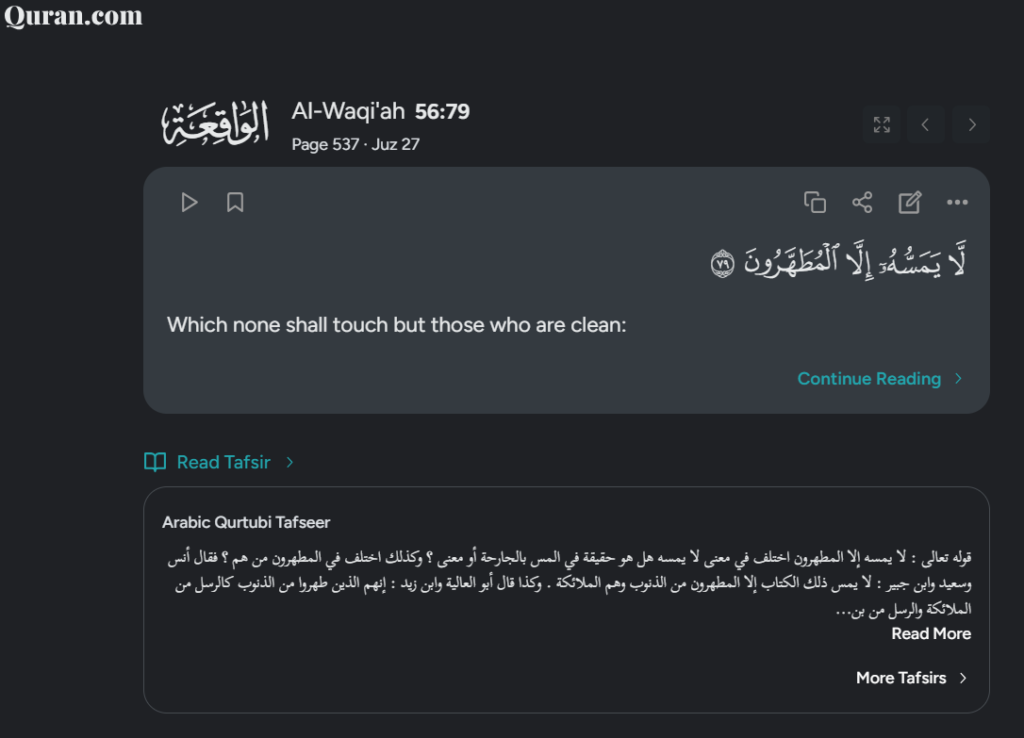
Ṣarf teaches you to read a word’s shape, not just its letters. That skill separates words that look almost identical. For example, المطهَّرون is a passive participle, while المتطهِّرون is an active participle.
One describes those made pure; the other describes those who purify themselves. That difference has shaped serious discussion around Sūrat al-Wāqiʿah 56:79.
Skipping this stage is why many learners hit an invisible wall later. They can name sentence parts but cannot explain why a verb carries the meaning it does. The wall is almost always morphology.
3- Stage Three —Fousing on Studying Balāghah And Applied Quranic Iʿrāb
This is where the earlier work pays you back. Start with Al-Balāghah al-Wāḍiḥah by ʿAlī al-Jārim. It introduces fronting, ellipsis, and emphasis in plain language.
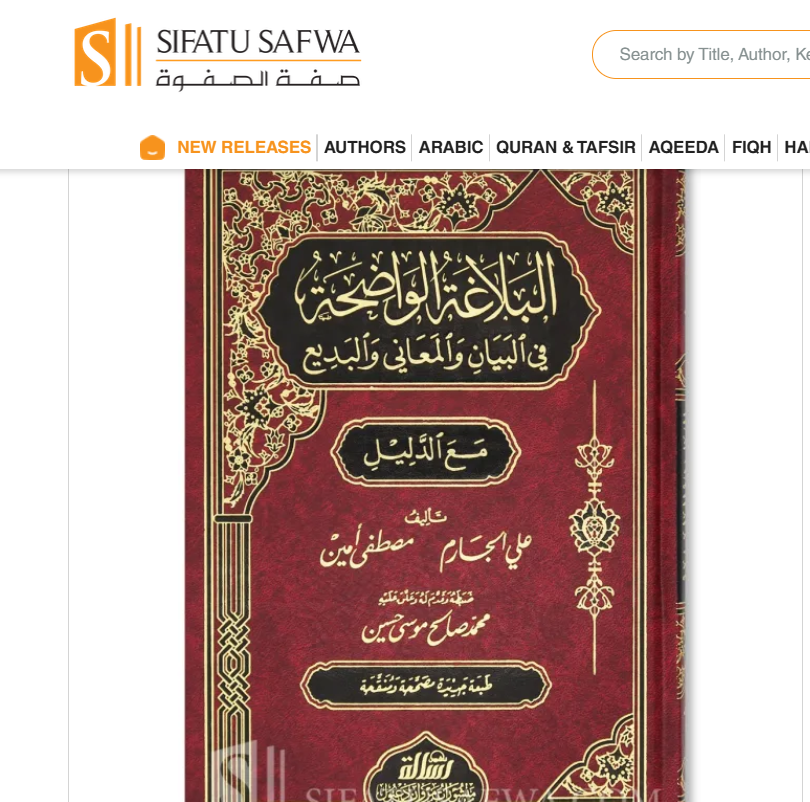
These tools answer the question grammar alone leaves open. Grammar tells you what a word is doing. Balāghah tells you why it sits in that exact place. That is how you see, for example, why the object comes first in Sūrat Fāṭir 35:28.
Read a dedicated iʿrāb work on the Quran at the same time. Good choices are Mushkil Iʿrāb al-Qurʾān by Makkī ibn Abī Ṭālib and Iʿrāb al-Qurʾān by al-Naḥḥās. These books walk you through the hard verses one by one.
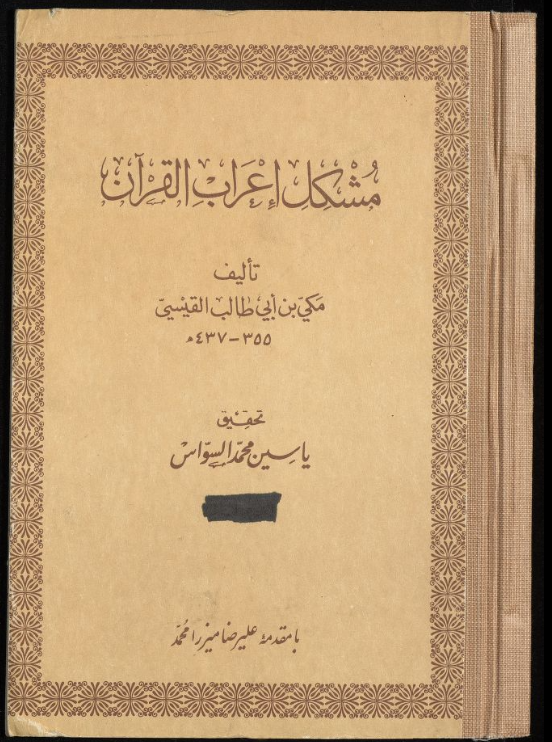
Do this stage out loud with a tutor who checks your parsing. That is the difference between recognizing grammar and producing it.
Abjad’s one-to-one Quranic Arabic sessions are built around that correction loop, because silent self-study lets small errors harden into habits.
With a private tutor correcting your mistakes on the spot, there is nothing to be afraid of. Meet Abjad’s tutors, pick the one who fits you, and book your free trial lesson.
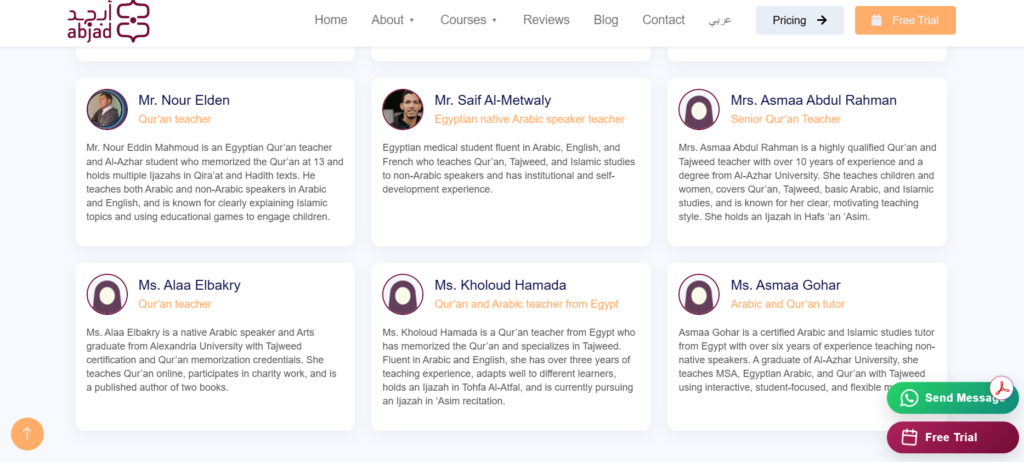
You may also like: Meet Abjad’s Arabic Teachers – Full Profiles
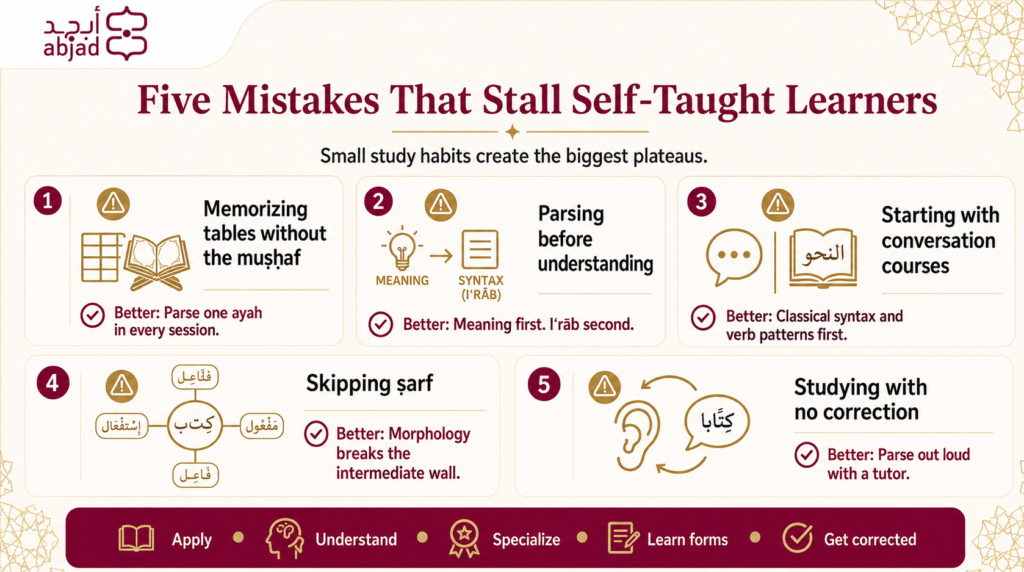
Five Mistakes to Avoid If You Are Studying Alone
Memorizing grammar rules without ever opening the muṣḥaf. Grammar you never use fades quickly. Apply one rule to one real verse in every study session, starting from your very first lesson. A short verse from Juzʾ ʿAmma is enough.
Working out the endings before you understand what the verse means. Al-Zarkashī’s rule applies here again: meaning comes first, iʿrāb comes second. If you do not know what the sentence is saying, you have nothing to check your parsing against.
You can then produce an answer that follows the rules perfectly and still misses the point of the verse. Read for meaning, then parse, then see whether the two agree.
Starting with a modern conversation course instead of Quranic Arabic. They are useful for travel and slow for the Quran. Quranic Arabic puts classical syntax and verb patterns first, while conversation courses delay them for years.
Skipping ṣarf and jumping straight into naḥw. Learners stall at intermediate naḥw and cannot say why. The cause is almost always missing morphology.
Studying alone, with nobody to hear your mistakes and correct them. You cannot hear your own wrong parsing. This is the one gap self-study cannot close by design, and it is why this knowledge was always passed on face to face.
Read also: Arabic Grammar Exercises That Actually Make You Better
Inside Our Live Classes
Don’t just take our word for it—see for yourself! Click below to watch short clips from our live classes and meet the instructors who will guide your learning journey.
Start Your Free Trial Lesson With Abjad Today
Stop reading about the Quran and start reading the Quran. Abjad pairs you with a native Arabic tutor for one-to-one online lessons. Most of the teachers are Al-Azhar graduates, and several hold ijāzah in Tajwīd and Quran recitation, so the corrections you get come from trained ears.
Can’t decide yet? Hear it from one of our students first.

Every lesson is built around your level and your schedule. Choose 30 or 45 minutes, one to five times a week, with early morning and late evening slots. Plans start at $18.99 a month, and the first class is free.

Explore the Arabic Language Courses at Abjad
Every course below is one-to-one, online, and taught by qualified native Arab tutors. Have a look and pick which one suits you better.
- Quranic Arabic Course
- Arabic Grammar Course
- Best Arabic Course in the UAE
- Fusha Arabic Course
- Modern Standard Arabic Course.
- Arabic Intensive Course
- Learn to Write Arabic Course
- Arabic Speaking Classes
- Teen Arabic Summer Course
- Emirati Arabic Course
Begin Your Arabic Journey in the UAE
Join Abjad Institute for a professional and immersive Arabic language experience tailored to your goals.
Book Your Free TrialConclusion
Arabic grammar for Quran study is the line between reading a translation and reading the Quran itself. A translation gives you someone else’s understanding of the verse. Grammar gives you the verse.
Nahw shows the roles in the sentence, ṣarf explains the shape of each word, and iʿrāb puts both on the page in marks you can see.
That is why one ḥarakah matters so much. In Sūrat al-Tawbah 9:3, it protects the meaning. In Sūrat Fāṭir 35:28, it decides who fears whom. In Sūrat al-Māʾidah 5:6, it decides how you make wuḍūʾ.
For your Learning, the path is simple. Start with foundational nahw, add ṣarf once the sentence parts make sense, then move to balāghah with a book of Quranic iʿrāb beside your muṣḥaf.
The first weeks feel slow, and that is normal. Every learner passes through a stage where the rules feel abstract, and then a stage where verses start to open. The second stage comes faster when you study in the right order.
What most learners lack is not books. Books are everywhere, and many are free. What they lack is correction. You cannot hear your own wrong ending, and a mistake repeated for six months is hard to undo.
For your learning, start this week. Open Al-Ājurrūmiyyah, keep the muṣḥaf beside it, and parse one short verse a day. Add a tutor who corrects you as you go, and the Quran’s structure will stop being a wall and become a door.
Frequently Asked Questions
Do I need Arabic grammar to understand the Quran?
Yes, if you want accurate understanding. A translation gives you the general sense, but Arabic grammar for Quran study is what shows you the subject, the object, and the case endings that decide what a verse actually says.
What is iʿrāb in simple words?
Iʿrāb is the ending that appears on a word because of the job it does in the sentence. It shows whether a word is the doer, the receiver, or something else. Change the ending and you change the meaning.
What is the difference between naḥw and ṣarf?
Naḥw deals with words inside a sentence and the endings they take. Ṣarf deals with the shape of the word itself, before it enters a sentence. You need both to read Quranic Arabic properly.
How long does it take to learn Arabic grammar for the Quran?
It depends on how often you study and whether a tutor corrects you. Al-Ājurrūmiyyah is a short text that many students cover over consistent weekly sessions. Applied Quranic iʿrāb is an ongoing practice, not a course you finish once.
Which book should I start with?
Start with Al-Ājurrūmiyyah in naḥw, along with a clear commentary. Then move to Shadhā al-ʿArf for ṣarf. After that, use Al-Balāghah al-Wāḍiḥah with Mushkil Iʿrāb al-Qurʾān for the applied stage.
Can I learn Arabic grammar for the Quran on my own?
Partly. Self-study works for learning the rules, but it cannot check your parsing or your pronunciation of endings. Most learners pair a book with a teacher who listens and corrects.
What is the difference between Quranic Arabic and Modern Standard Arabic?
Quranic Arabic is classical Arabic as used in the Quran, with full case endings and classical particles. Modern Standard Arabic uses the same grammar system but different vocabulary, and speakers usually drop the endings.





Leave a Reply