 Learn Arabic
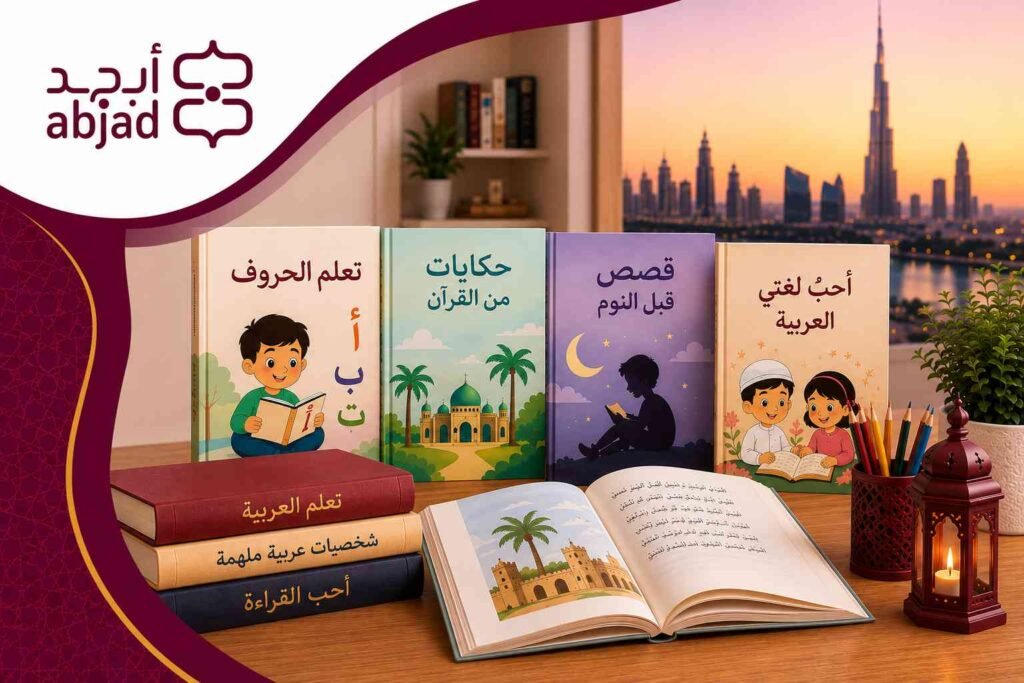
Arabic literacy in the UAE carries a weight most other languages do not. It is the language of the Quran, of Emirati culture, of formal education, and of regional professional life. A child who reads Arabic comfortably has access to all of that. A child who merely recognises letters has a ceiling.
Few investments a parent makes pay off as consistently as putting the right Arabic books into a child’s hands early. Arabic books for kids cover the full arc of language development – from first letter sounds to rich cultural storytelling — and choosing them well is the single most effective thing UAE families can do to support Arabic literacy outside the classroom.
This is not about filling a shelf with every title available. It is about knowing which categories of Arabic children’s books do specific things, at specific ages, and selecting accordingly. The eight types below cover every stage of a child’s Arabic reading journey, from toddler board books to heritage literature.
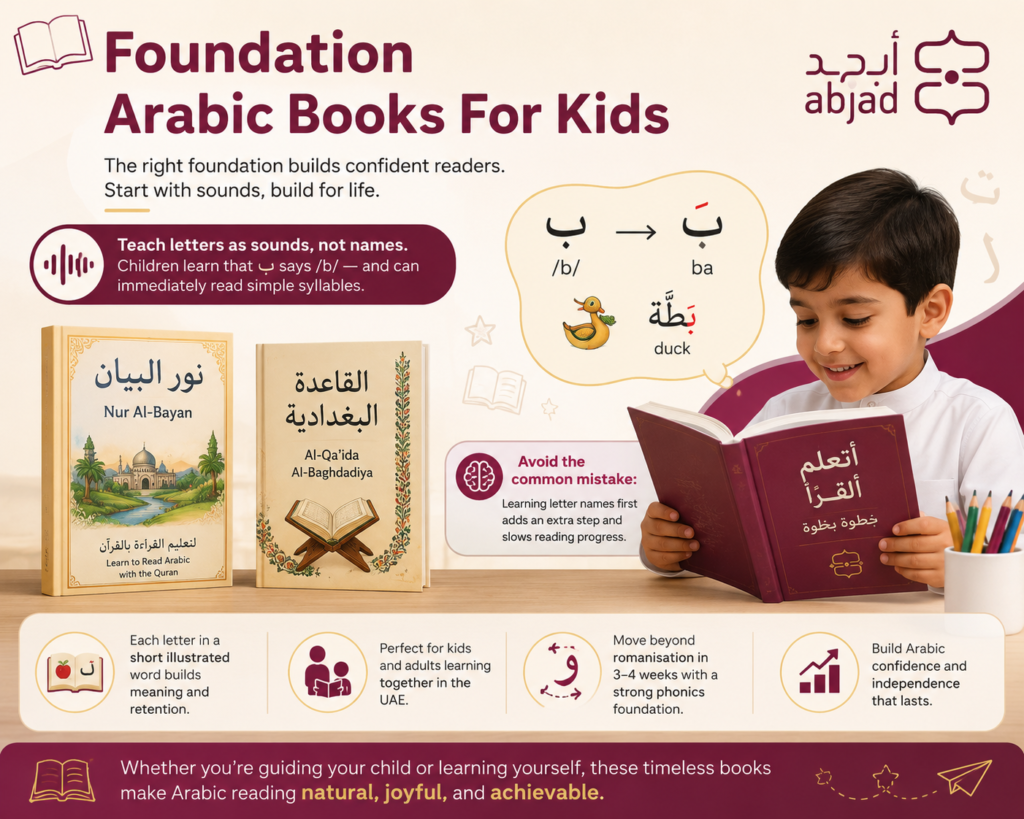
1. Foundation Arabic Books For Kids
Foundation letter books teach the Arabic alphabet as sounds rather than names. Instead of learning that “ب” is called “ba,” children learn that it says /b/ — and can immediately begin combining it with short vowels to read simple syllables. Classic series like Nour Al-Bayan and Al-Qa’ida Al-Baghdadiya have remained in print for generations because this phonics-first approach works consistently.

A common mistake UAE parents make is introducing letter names before sounds, which adds an extra cognitive step before a child can read anything. Foundation books that embed each letter in a short illustrated word eliminate this bottleneck from the start.
For parents wondering how to read Arabic letters in the UAE alongside their child, these phonics-based titles work as much for adults beginning the language as for young learners.
Parents who find themselves relying on how to read Arabic in English letters as a transitional crutch will find that three to four weeks with a solid phonics foundation book makes romanisation unnecessary — children quickly gain enough Arabic script confidence to leave it behind.
2. Interactive And Sensory Books For Toddlers And Pre-Readers
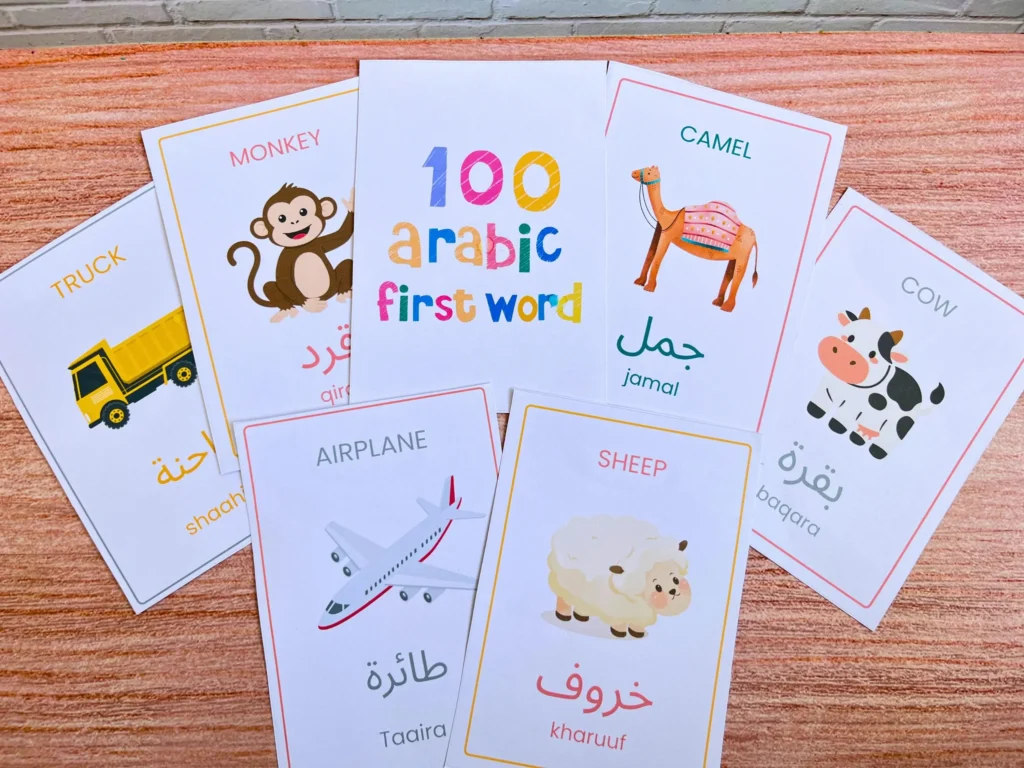
For children under five, the goal is not yet decoding — it is building a positive emotional relationship with Arabic and with books themselves. Touch-and-feel titles, sound-button books, and lift-the-flap Arabic picture books give very young children exposure to vocabulary, rhyme, and language rhythm long before formal reading begins.
The evidence on this is consistent: children read regularly in a language during infancy outperform peers in that language’s literacy outcomes years later, even when formal instruction starts at the same age. In a UAE household where English often dominates, these early Arabic sensory books are the simplest way to keep Arabic present and alive from birth.
Start Your Journey with our Arabic Course at Abjad Academy with a Free Trial
Watch Our Classes in Action
Curious what a real session looks like? Take a peek inside our interactive classrooms and see how our expert instructors bring the Arabic language to life. Watch a sample lesson below!
Begin Your Arabic Journey in the UAE
Join Abjad Institute for a professional and immersive Arabic language experience tailored to your goals.
Book Your Free Trial
3. Graded Arabic Readers To Your Child’s Exact Level
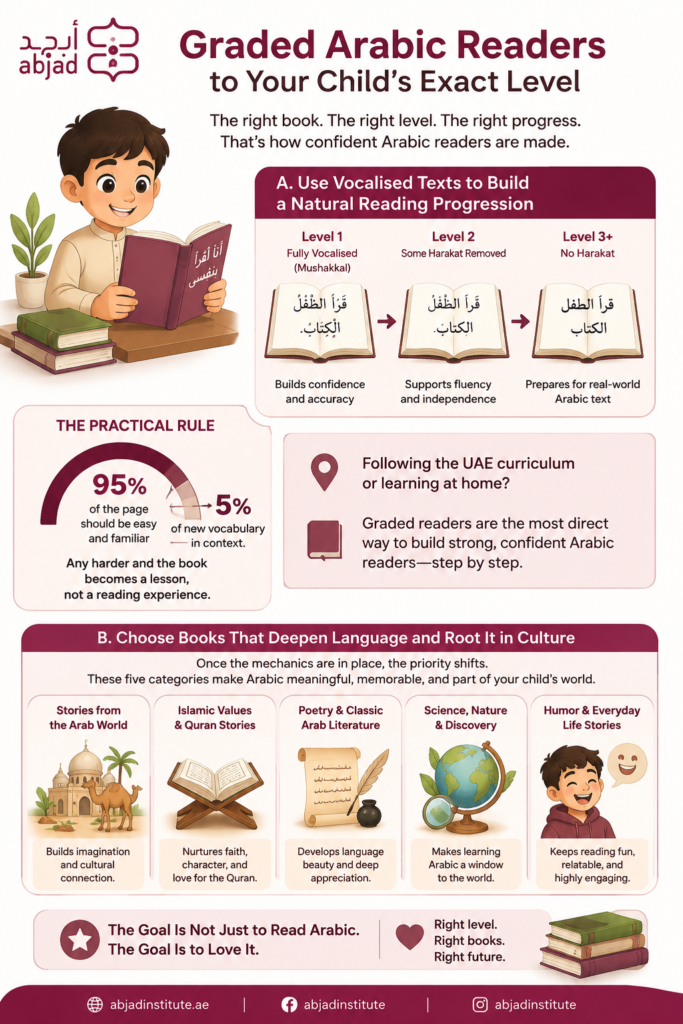
Once a child knows the letters and basic short vowels, they need reading material precisely calibrated to their current ability. Too easy and there is no growth; too hard and frustration sets in. Graded Arabic readers — series like Ana Aqra Binafsee (“I Read on My Own”) — offer discrete levels a parent or teacher can match to the child’s exact stage.
A. Use Vocalised Texts To Build A Natural Reading Progression
Fully vocalised (mushakkal) texts in early levels, progressively dropping harakat in later ones, mirror how Arabic actually appears in real-world reading. For parents navigating how to read Arabic script in the UAE curriculum context — and wanting to replicate that progression at home — graded series are the most direct answer.
The practical rule: a child should handle 95% of a page independently, with roughly 5% being new vocabulary encountered in context. Any harder and the book functions as a lesson, not a reading experience.
B. Choose Books That Deepen Language And Root It In Culture
Once the mechanics are in place, the priority shifts. Arabic needs to feel meaningful, not just functional. The following five categories each do something the foundation books cannot: they make Arabic a language a child wants to be inside.
4. Quranic Arabic Storybooks
This category is consistently underestimated by parents who treat Quranic learning and general Arabic literacy as separate pursuits. Quranic Arabic storybooks — titles that narrate Quranic stories using a blend of Modern Standard Arabic and classical Quranic vocabulary — give children a language base that years of isolated tajweed practice alone cannot build.
Families who want to help their children learn how to read Arabic Quran in the UAE, through mosque instruction or an academy, find that storybook exposure to Quranic narrative and vocabulary makes formal lessons considerably faster. A child who already knows the stories of the prophets in Arabic processes Quranic sentences containing those names and events at a different level of comprehension.
Understanding the Quranic Arabic alphabet in its classical vocalised form — which these storybooks regularly feature — builds the specific script familiarity that underpins confident Quranic recitation. This is a dimension of Arabic literacy that general children’s fiction, however good, does not reach.
Learn Quranic Arabic from the Basics at Abjad Academy in the UAE

5. Arabic Folklore And Heritage Stories
The UAE sits at the intersection of Gulf Arabic tradition, Bedouin oral storytelling, and the broader Arabic literary heritage. Children’s books drawing on this tradition — tales of desert wisdom, fables featuring falcons and Arabian oryx, stories of the pearl-diving era — do something that imported translated titles cannot: they place Arabic inside a world a UAE child can identify with.
Series like Al-Maktaba Al-Khadra (The Green Library) and titles from regional Gulf publishers give children stories rooted in the landscape and values of the Arabian Peninsula. For UAE-born children of all backgrounds, this builds genuine cultural literacy alongside language skills. Families who take this interest further — learning how to read Arabic calligraphy featured on traditional crafts and cultural artefacts at UAE museums — find that these heritage stories provide natural context for that curiosity as well.
Start reading and writing Arabic with a FREE trial class

6. Activity Books And Reusable Writing Workbooks
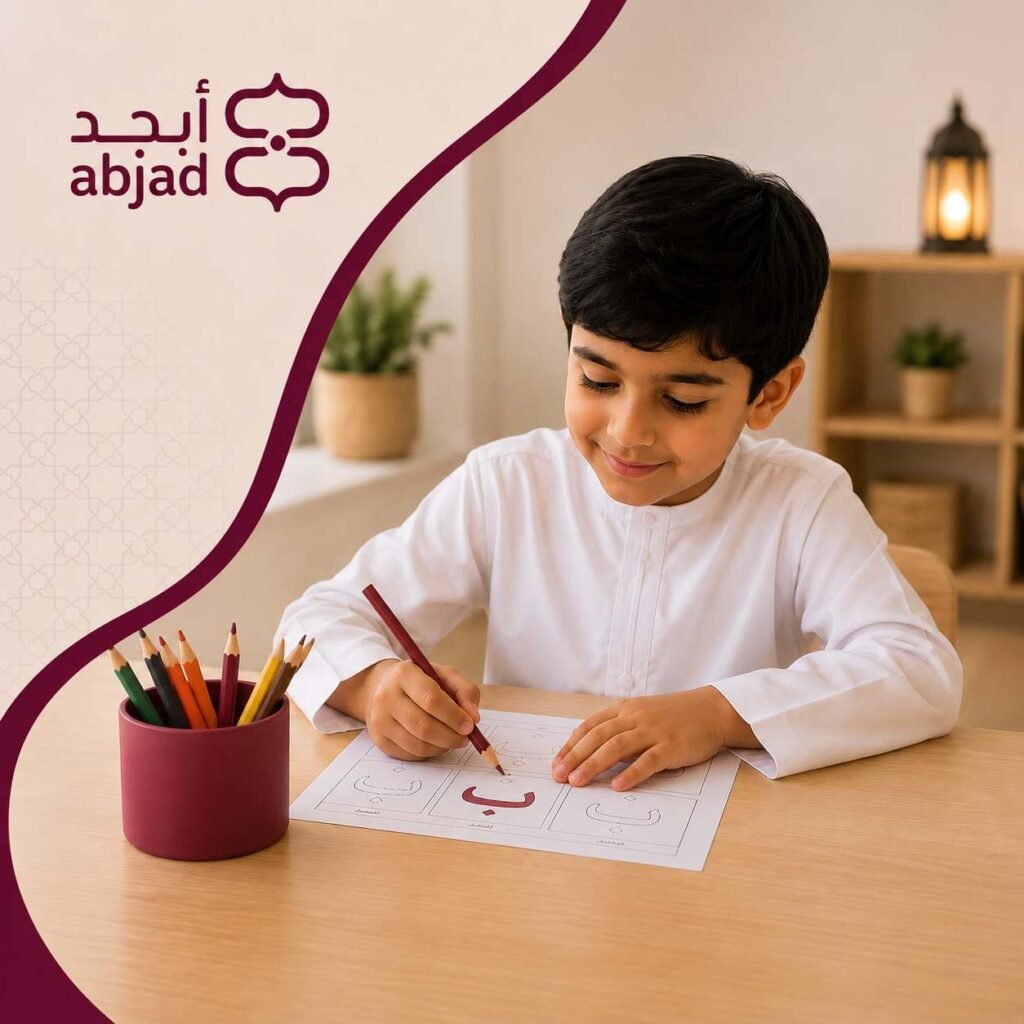
Arabic script requires a physical muscle memory that reading alone cannot build. Right-to-left directionality, connected letter forms, and the difference between isolated and joined shapes all need to be practised through writing — not just reading. Activity books with tracing exercises, fill-in sentences, and wipe-clean pages for repeated practice address this directly.
Parents who are simultaneously working on how to write in Arabic in the UAE — through a course or self-study — often find working through these workbooks alongside their children both effective and a natural bonding experience.
A practical tip from Arabic teachers: alternate 10 minutes of reading with 5 minutes of whiteboard writing. It prevents “reading without retention” — where a child decodes words accurately but cannot reproduce or recall them the following day.
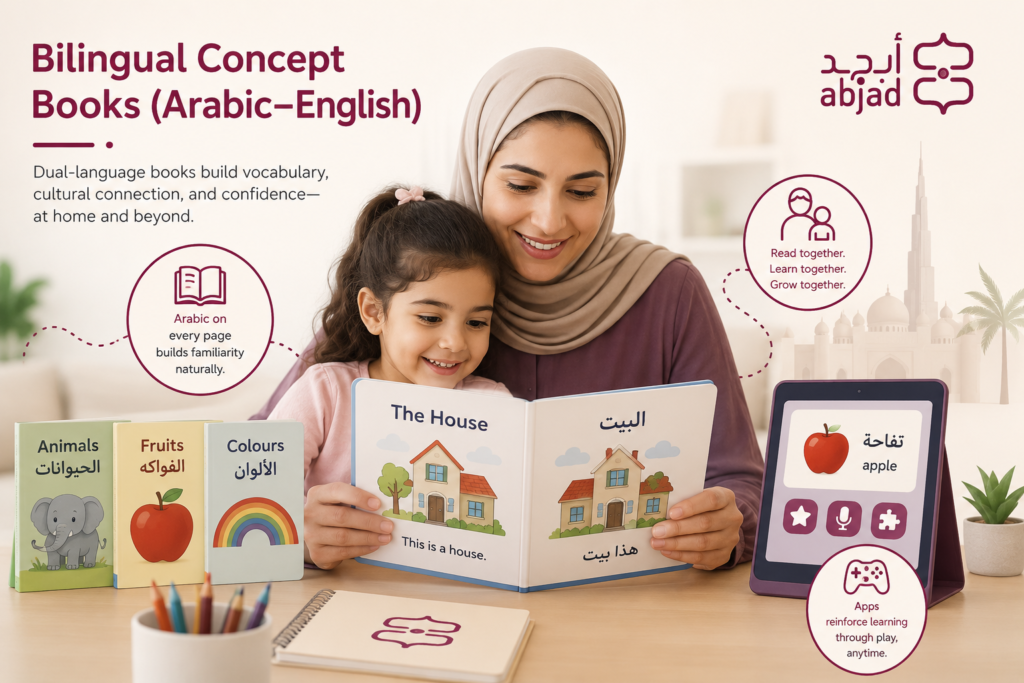
7. Bilingual Concept Books (Arabic–English)
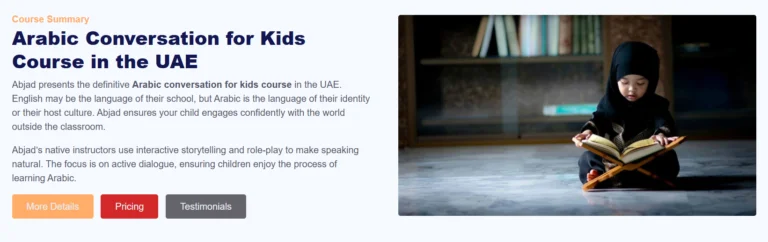
For UAE families where English dominates the home, bilingual books occupy a strategic position. They allow a parent with limited Arabic to sit alongside their child while Arabic text is present on every page, modelling the habit of reading Arabic even when the parent needs the English side for support.
The most critical point lays in looking for titles where the Arabic is a natural, idiomatic rendering of the concept, not a stiff word-for-word translation. Many bilingual books fall into the latter category, and children acquiring language unconsciously register the awkwardness.
Learn Arabic for kids as a parental ambition is most naturally begun with well-chosen bilingual titles, then extended with structured courses as confidence grows.
A quality learn to read Arabic app can complement physical bilingual books effectively, reinforcing vocabulary between reading sessions for children who respond well to gamified practice. The two formats work better together than either does alone.
8. Character And Values Stories In Arabic
The fastest-growing segment of Arabic children’s publishing focuses on emotional intelligence, social skills, and values. Books about managing anger, making new friends, or navigating change, written in clear, accessible Arabic, serve two purposes at once: they develop the language and they open conversations that parents are already hoping to have.
The engagement advantage is real and measurable in reading time. A child who connects with a character facing a relatable problem reads longer and returns to the book more readily than one working through a generic vocabulary story.
Longer reading time means more language exposure. A book a child requests at bedtime is doing more Arabic work per week than three titles that sit untouched on the shelf.
Inside Our Live Classes
Don’t just take our word for it-see for yourself! Click below to watch short clips from our live classes and meet the instructors who will guide your learning journey.
Begin Your Arabic Journey in the UAE
Join Abjad Institute for a professional and immersive Arabic language experience tailored to your goals.
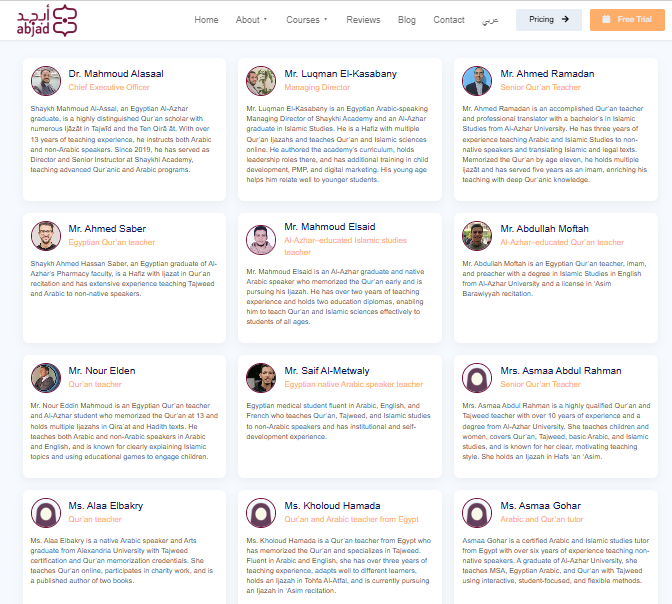
Book Your Free TrialMeet our Arabic and Quran Dedicated Skilled teachers
Start Your Child’s Arabic Reading Journey With Abjad Institute
Arabic books plant the seed; structured teaching helps it take root. Abjad Institute, based in the UAE, designs children’s Arabic programmes that move alongside what families are reading at home — reinforcing script recognition, vocabulary, and cultural context in a structured environment with qualified instructors.
Whether your child is meeting the alphabet for the first time or ready for connected Modern Standard Arabic passages, Abjad Institute offers a course calibrated to their exact stage, with Gulf Arabic cultural context woven throughout.
Discover Our Arabic Courses:
- Arabic Course for Kids
- Arabic Conversation for Kids
- Arabic Qaida for Kids
- Beginner Arabic for Kids
- Arabic Grammar for Kids
- Teen Arabic Summer Course
- Arabic Kids Camps
- UAE Kindergarten Arabic Classes
- Modern Standard Arabic Course
- Fusha Arabic Course
- Classical Arabic Course
- Emirati Arabic Course
- Gulf Arabic Course
- Learn Saudi Arabic
- Business Arabic Course UAE
- Arabic Language Classes for Professionals in UAE
- Quranic Arabic Course
Book your free trial today and see how far one session takes you.

Conclusion
The right Arabic books for kids do not just teach the alphabet, they determine whether a child grows up experiencing Arabic as a living language or a school subject they tolerate. In the UAE, where Arabic carries cultural, religious, and civic weight few other languages match, that distinction has lasting consequences that reach well beyond the classroom.
The eight categories in this guide cover the full arc of Arabic reading development: from first sounds and tactile exploration, through graded independent reading, to heritage storytelling and emotional narrative.
On the practical question of how long does it take to learn to read Arabic: with daily reading practice of 15 to 20 minutes and a solid phonics foundation, most children reach comfortable independent reading level within 12 to 18 months of starting.
Accelerated approaches marketed as how to learn to read Arabic in 21 days can build letter recognition and basic blending quickly, but reading connected text with real comprehension is a cumulative skill — it deepens with every book a child finishes, not every sprint they complete.
Frequently Asked Questions
What age should children start with Arabic books?
Children can engage with Arabic through board books and touch-and-feel titles from as early as six months. Formal letter recognition typically begins around age four to five, depending on individual readiness.
Are there Arabic books suitable for children who speak English at home?
Bilingual Arabic–English concept books are widely available in UAE bookshops (Kinokuniya, Virgin Megastore) and through online retailers. Prioritise titles where the Arabic reads as natural, idiomatic text rather than a stiff translation — the language quality matters for unconscious acquisition.
What is the difference between Modern Standard Arabic books and Gulf Arabic books for children?
Modern Standard Arabic (Fusha) books use the written language of formal education, literature, and the Quran — the variety children are examined in school and read throughout the Arab world. Gulf Arabic books reflect the spoken vernacular of UAE daily life. For literacy purposes, Modern Standard Arabic is the priority; Gulf dialect exposure develops naturally through conversation and the environment around them.
How do I know if an Arabic book is the right level for my child?
Ask your child to read one page aloud. If they struggle with more than one word in ten, use the book for shared read-aloud sessions rather than independent reading. If they sail through without hesitation, it is too easy. The productive reading level is roughly one unfamiliar word per page — enough to stretch, not enough to frustrate.
Can Arabic books help children prepare for Quranic reading?
The benefits of learning Quranic Arabic extend beyond religious practice — classical Quranic vocabulary is deeply embedded in Arabic literary culture as a whole. Quranic storybooks give children both the narrative context and the vocabulary they need before formal Quran instruction begins. Many UAE families pursue both tracks simultaneously and find each reinforces the other.
Should I read Arabic books with my child even if my own Arabic is limited?
Reading together — pointing at words, asking questions, talking about the pictures in whatever shared language you have — builds the habit of engaging with Arabic text regardless of your own fluency level. Parents who are themselves learning how to learn to read Arabic online for free or through a course often find that studying alongside their child produces better results for both than waiting until they feel qualified to teach.




Leave a Reply